When a field investigator files an incomplete wildfire incident report, the consequence isn’t a bad performance review. It’s a regulatory finding that can result in fines, operational restrictions, and public safety risk. When a newly certified assessor makes an error on an energy audit, the consequence isn’t a customer complaint. It’s a failed compliance inspection that puts the consultancy’s accreditation at risk.
Energy and utilities training operates in an environment where the stakes of poor performance are measured in regulatory penalties, safety incidents, and public trust — not just business metrics. This changes everything about how training should be designed, delivered, and measured.
What makes energy and utilities training different
Four factors separate this sector from standard corporate training environments.
The first is regulatory density. Energy and utilities organizations operate under multiple overlapping regulatory frameworks — federal, state or provincial, municipal, and industry-specific. A single employee might need training on electrical safety standards, environmental compliance, incident reporting protocols, and customer data privacy — each governed by different regulations with different reporting requirements. The training program must address all of them without overwhelming the learner or creating gaps that an auditor will find.
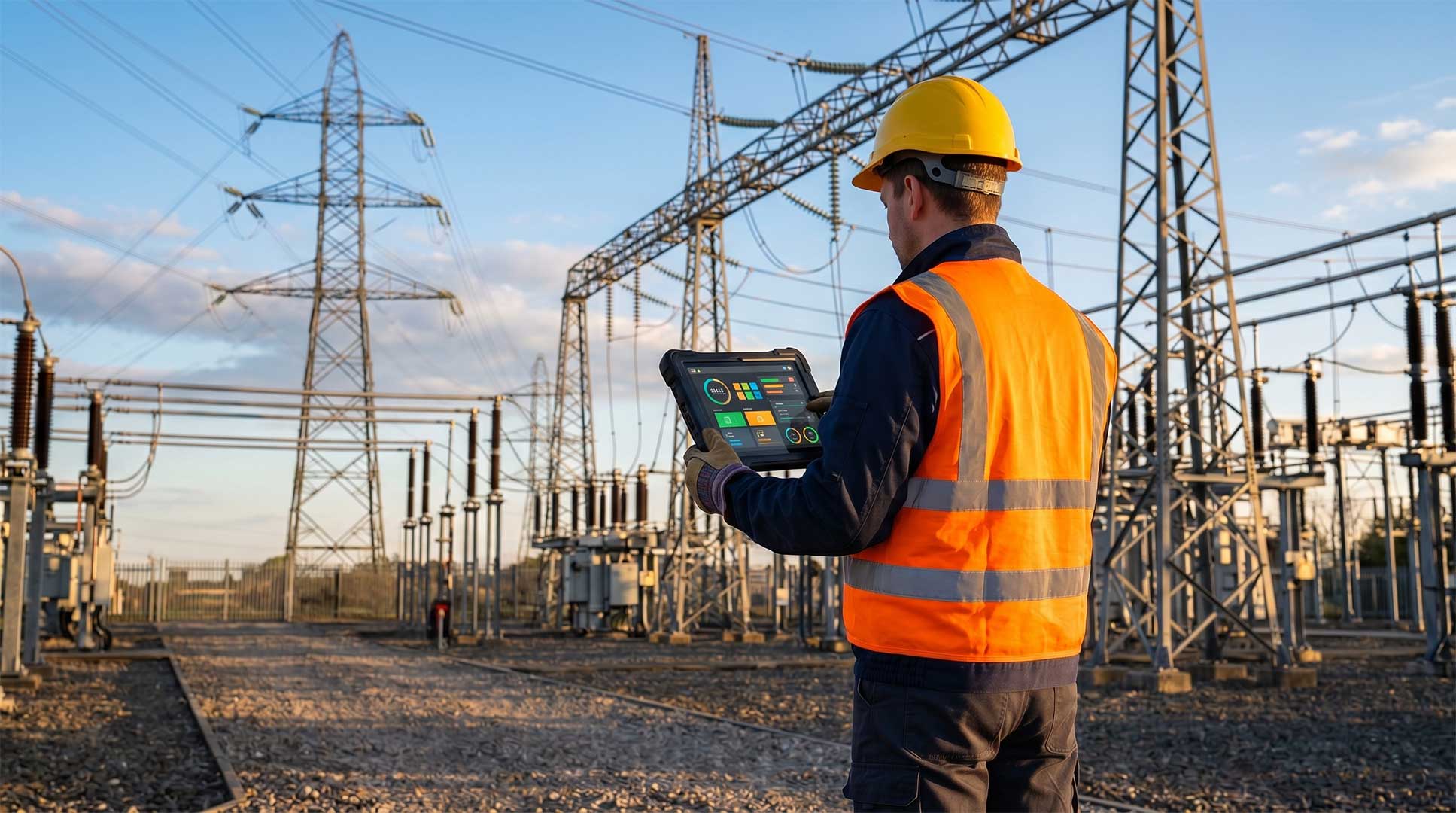
The second is geographic distribution. Field crews, plant operators, substation technicians, and customer-facing staff work across hundreds or thousands of locations. Many work in remote areas with limited connectivity. Training that requires a desktop computer and reliable internet excludes the people who need it most. Mobile-capable, offline-accessible content isn’t a feature — it’s a requirement.
The third is safety criticality. In most industries, a training gap produces a performance problem. In energy and utilities, a training gap can produce an injury, an environmental incident, or a fatality. Safety training must go beyond awareness to build the judgment and muscle memory that prevents incidents under real operating conditions — not just in a classroom exercise.
The fourth is workforce transition. The energy sector is experiencing simultaneous retirements of experienced workers and an influx of new hires who lack institutional knowledge. The knowledge that kept a substation running safely for 30 years lives in the heads of people who are leaving. Training must capture and transfer that operational expertise before it walks out the door.
Scenario-based training for field operations
Standard eLearning — read a policy, watch a video, pass a quiz — doesn’t build the decision-making capability that field operations demand. When a lineworker encounters an unexpected condition on a de-energized line, they need to make a safety decision in seconds. That decision comes from practiced judgment, not from remembering a slide.
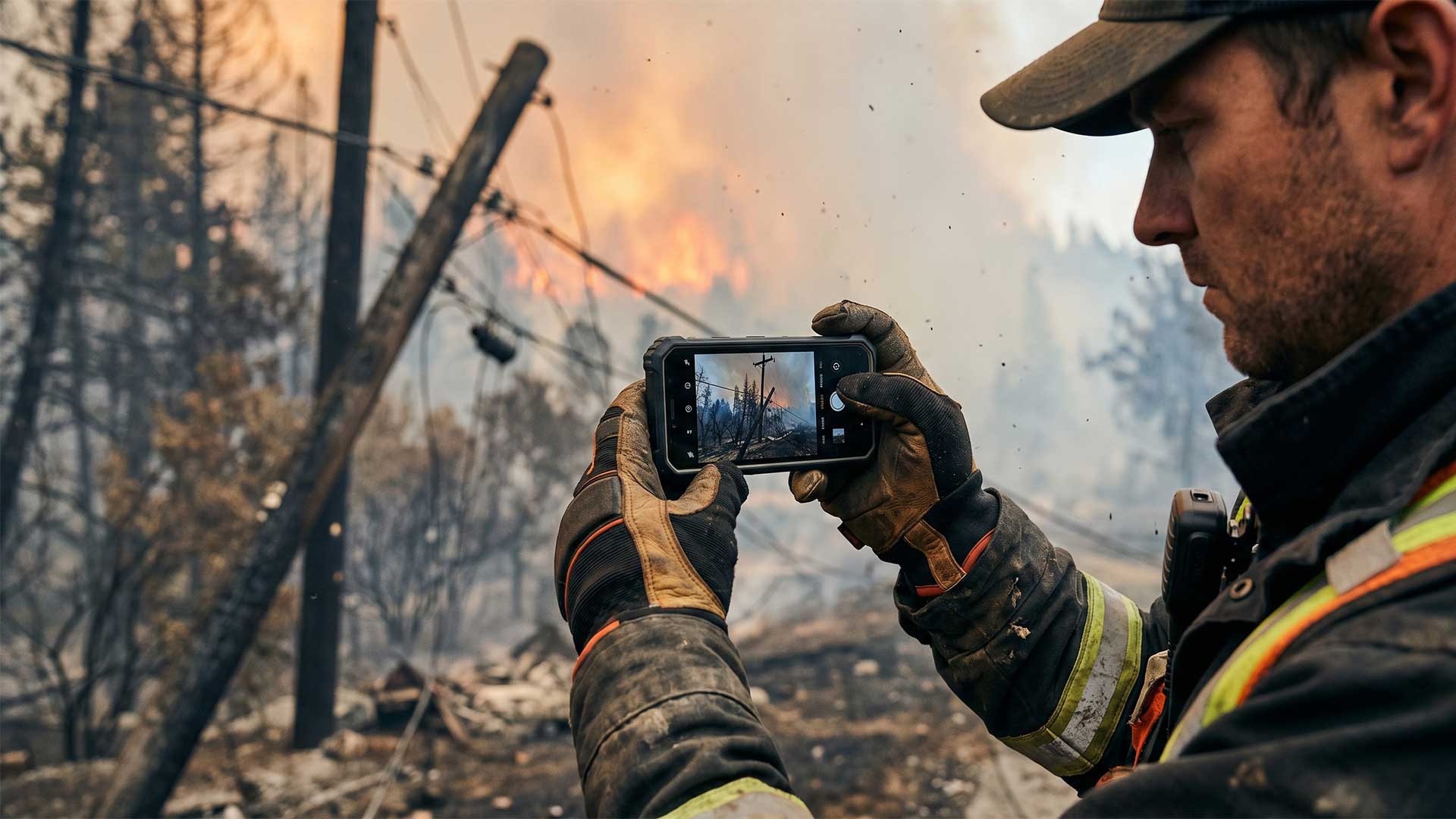
Effective energy training puts workers in simulated field conditions and asks them to make operational decisions. A wildfire investigation scenario where the investigator must document scene conditions, identify ignition sources, and classify the incident correctly — with branching paths that show what happens when documentation is incomplete. A switching operation scenario where the technician must verify isolation points and confirm de-energization before proceeding — with consequences that illustrate what happens when steps are skipped under time pressure.
A national electric utility we worked with needed wildfire incident reporting training for field investigators. The previous approach was classroom-based with paper checklists. Investigators learned the process but didn’t practice applying it under realistic conditions. We replaced it with scenario-based eLearning where investigators worked through simulated wildfire scenes, making documentation decisions at each stage. Report completeness scores improved 33%. Completion reached 89% across all field teams. Zero regulatory flags on documentation in the following audit cycle.
Building compliance training for multi-regulatory environments
Energy organizations don’t have one compliance requirement. They have dozens, governed by different authorities with different standards and different audit cycles. Building a single massive compliance program creates a training burden that employees resent and click through without learning. Building separate programs for each regulation creates redundancy and administrative chaos.
The effective approach is modular compliance architecture. Core modules cover foundational requirements that span multiple regulations — general safety principles, documentation standards, incident reporting protocols. Regulation-specific modules address the unique requirements of each framework. Role-based paths ensure each employee takes only the modules relevant to their responsibilities.
This architecture makes updates manageable. When a regulation changes, you update one module instead of rebuilding an entire program. When a new regulation takes effect, you add a module to the relevant role paths without disrupting the existing curriculum.
Delivery should be distributed throughout the year, not concentrated in an annual training period. Monthly microlearning modules of 10 to 15 minutes each produce significantly better retention than a single multi-day compliance marathon. And they keep compliance visible as an ongoing operational priority rather than an annual checkbox.
Accelerating onboarding for technical roles
Energy and utilities roles often require months of training before an employee can work independently. A new assessor, field technician, or plant operator needs to learn complex technical processes, regulatory requirements, safety protocols, and company-specific procedures — often while being mentored by a senior employee whose time is the most expensive resource in the organization.
Structured eLearning reduces the burden on senior staff by handling the knowledge transfer that doesn’t require hands-on supervision. Theory, regulations, procedures, and system navigation can all be delivered through self-paced modules with built-in assessments. This frees the mentor’s time for what only a mentor can provide: on-the-job guidance, judgment development, and supervised practice on live systems.
An energy consultancy in Australia needed to onboard new assessors who were spending 12 weeks in training before they could conduct independent audits. Senior assessors were spending roughly 8 hours per week on repetitive walkthroughs for each new hire. We built audience-specific learning paths covering regulatory frameworks, assessment methodology, and reporting standards. Onboarding time dropped from 12 weeks to 8. Senior assessor time recovered was approximately 6 hours per week per new hire. And 100% ISO audit compliance was maintained throughout the transition.
Safety training that builds judgment, not just awareness
The gap between safety awareness and safety judgment is the gap between knowing what to do and doing it under pressure. Most safety training addresses awareness. Effective safety training builds judgment through repeated practice in realistic conditions.
Three design principles make safety training effective in energy environments.
The first is consequence-based scenarios. When a learner skips a safety step in a simulation and sees the resulting incident unfold — the arc flash, the gas leak, the equipment failure — the lesson imprints differently than reading a policy that says “always verify isolation.” The emotional weight of a simulated consequence builds the instinct to follow the procedure when real pressure tempts shortcuts.
The second is progressive complexity. Start with straightforward scenarios where the safe choice is clear. Then introduce complicating factors: time pressure, conflicting instructions, ambiguous conditions, equipment that doesn’t behave as expected. Each level of complexity builds on the previous one, developing the judgment to handle situations that a simple checklist can’t cover.
The third is regular reinforcement. Safety judgment degrades without practice, especially for procedures that are critical but infrequent. Monthly safety scenarios — five minutes each, focused on one decision point — maintain readiness for situations that might occur once a year but demand correct response every time.
Capturing institutional knowledge before it leaves
The energy sector faces a demographic challenge: experienced workers retiring faster than new ones can absorb their knowledge. The procedures are documented. The institutional judgment is not.
The most effective approach is structured knowledge capture integrated into the training development process. During the discovery phase, interview the experienced workers who know why the procedure exists, not just what the procedure says. Capture the exceptions, the workarounds, the ‘when the gauge reads this but the conditions look like that’ judgment calls that only come from decades of experience.
Build this knowledge into scenario-based training where new workers face the same situations and develop the same judgment — compressed from 20 years of experience into 20 hours of structured practice. This doesn’t replace mentorship. But it ensures that when the mentor retires, the critical knowledge lives in the training program, not just in one person’s memory.
Measuring training impact in regulated environments
Regulators don’t care about completion rates. They care about competency and compliance outcomes. Your measurement framework should speak their language.
Track audit findings before and after training deployment. If documentation deficiencies decrease, the training is producing the required competency. If incident rates decline, the safety training is building effective judgment. If new employees reach independent certification faster without quality degradation, the onboarding program is working.
Track these metrics by location, by role, and by training cohort. When a specific location shows persistent gaps despite high completion, the problem is local — management reinforcement, not content redesign. When a specific topic shows widespread gaps across locations, the content needs strengthening.
Present training data alongside operational data in the same reports that go to regulators and leadership. When compliance training completion, assessment performance, and audit results appear in the same dashboard, training stops being an HR function and becomes an operational performance lever.
What to look for in a training partner for energy and utilities
Look for experience with regulated content and safety-critical training. The design sensibility for a pharmaceutical compliance module is different from a lineworker safety scenario. Ask whether the agency has worked in environments where training failures have physical safety consequences.
Look for mobile and offline delivery capability. If the training doesn’t work on a tablet in a remote substation with no cell signal, it doesn’t work for your workforce.
Look for scenario design that reflects real field conditions. Generic safety scenarios set in clean, well-lit environments don’t prepare workers for the conditions they actually face. The scenarios should look and feel like the job.
And look for a partner who understands that in energy and utilities, training isn’t professional development. It’s operational readiness. The quality of the training directly determines the safety of the workforce and the compliance posture of the organization.