In manufacturing, energy, and field operations, the gap between a trained workforce and an untrained one isn’t measured in productivity metrics. It’s measured in incident reports, near-miss logs, and — in the worst cases — injuries. Safety training in high-consequence industries carries a weight that office-based training doesn’t: the decisions your people make under pressure, in real time, with incomplete information, determine whether everyone goes home at the end of the shift.
And yet most safety training in these industries still looks like a compliance exercise. Annual refreshers. Slide decks with stock photos of hard hats. Assessments that test whether the worker can identify the correct PPE from a multiple-choice list. The regulatory box gets checked. The behavior on the floor doesn’t change.
The organizations with the strongest safety records don’t just train more often. They train differently — replacing information delivery with decision practice, replacing classroom lectures with scenarios that mirror the situations their workers actually face, and replacing annual marathons with continuous reinforcement that keeps critical protocols active in memory.
Why traditional safety training fails in high-consequence environments
Three structural problems undermine most safety training programs in manufacturing and field operations.
The first is the gap between knowing and doing. A technician can score 100% on a written safety assessment and still take a shortcut on the floor because the assessment tested recall, not judgment. Knowing the lockout/tagout procedure and executing it correctly under time pressure when a production line is down are fundamentally different skills. One lives in memory. The other lives in muscle memory and decision-making habits. Traditional training builds the first. It rarely builds the second.
The second is the inaccessibility of live practice. In many high-risk environments, you can’t practice the critical decisions in real conditions. You can’t set a controlled fire on a naval vessel to practice re-entry procedures. You can’t stage an equipment malfunction on an active production line. You can’t send an untrained responder to a wildfire scene. The situations where training matters most are exactly the situations where live practice is impossible, dangerous, or prohibitively expensive.
The third is the tribal knowledge problem. In manufacturing and field operations, the most critical operational knowledge often lives in the heads of senior workers who’ve been doing the job for 20 years. They know which sounds from the machine indicate a problem. They know which field conditions change the procedure. They know the difference between a safe shortcut and a dangerous one. When those workers retire or leave, that knowledge walks out with them — and no amount of policy documentation captures it, because it was never documented in the first place.
Scenario-based training for decisions you can’t practice live
The most effective safety training in high-consequence environments puts workers in realistic decision-making situations without the real-world risk. Interactive scenarios — video-based, illustrated, or simulation-driven — present the worker with a situation they’d encounter on the job and ask them to make the call.
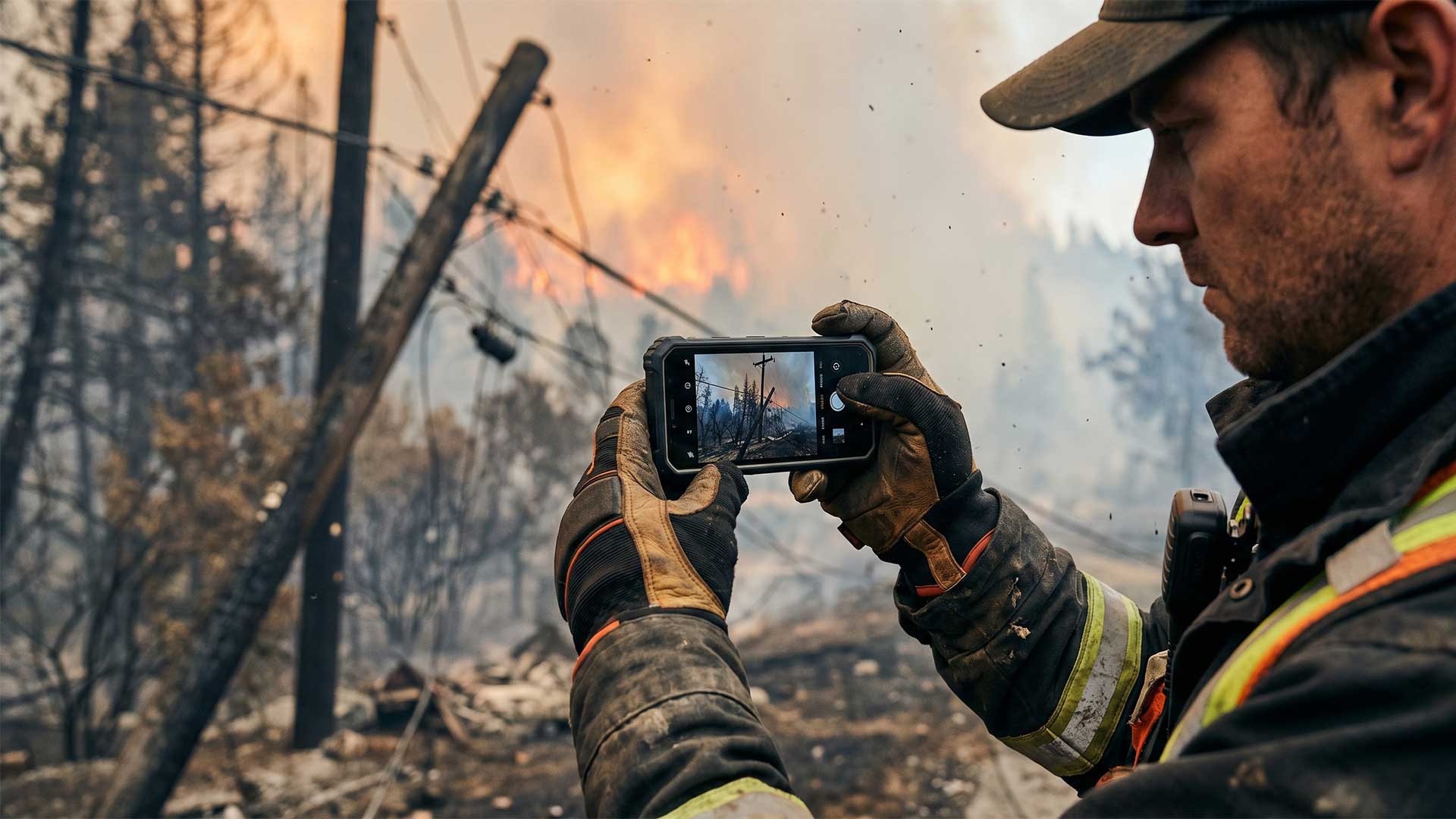
A wildfire responder arrives at a scene and needs to decide: which area to document first, what photos to take, whether the cause indicators point to equipment failure or environmental factors. Each decision leads to a consequence — a complete investigation file or a report that’s missing critical evidence. The responder builds the judgment to get it right before they’re standing in front of an actual wildfire.
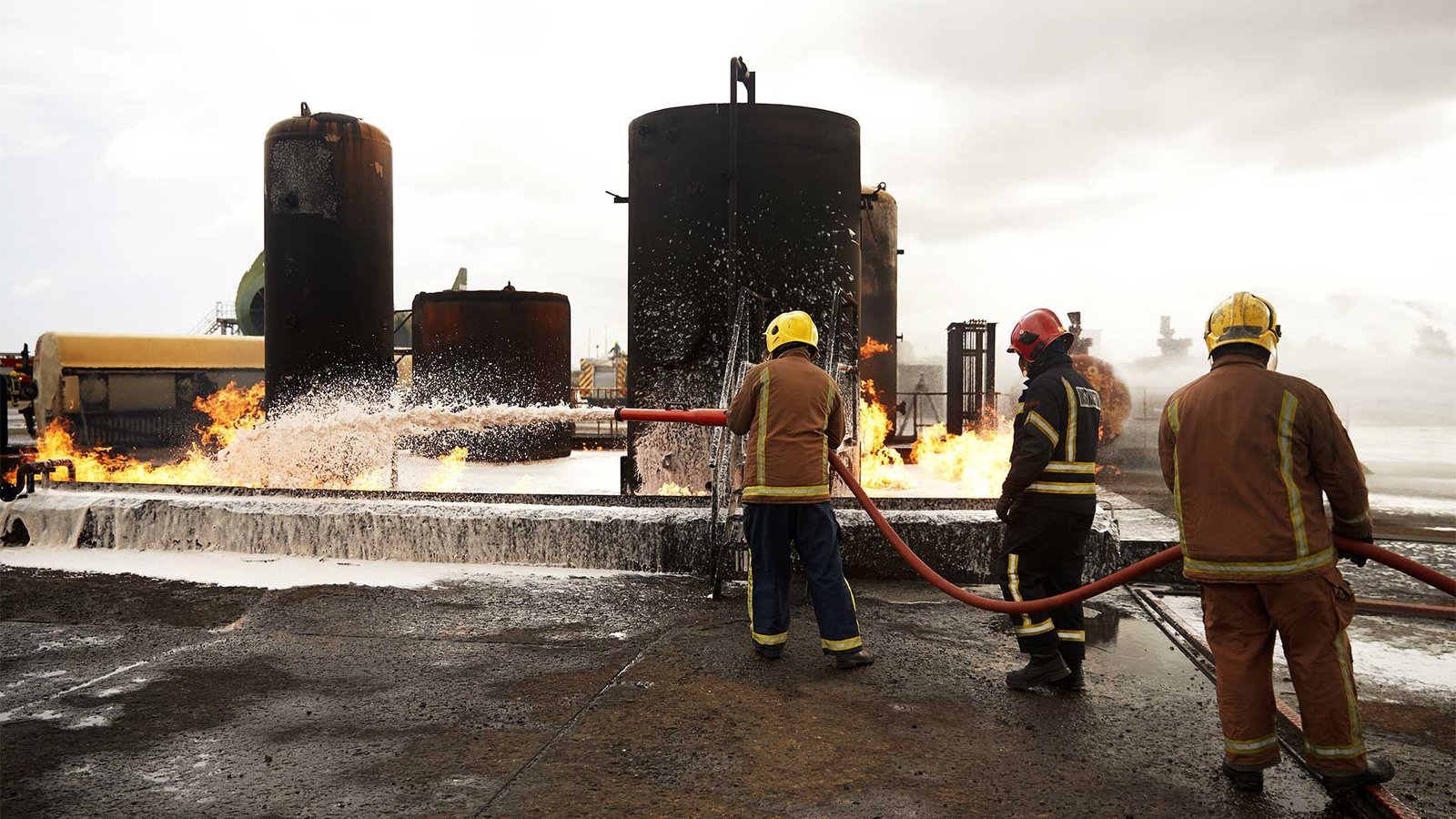
A naval crew member faces a shipboard fire. The module walks through the complete re-entry sequence — hose preparation, nozzle safety, entry approach, foam deployment, crew coordination. At each stage, the learner makes the same judgment calls they’d make in a real fire. Wrong choices trigger real video footage showing the consequence. The emotional weight of seeing the failure — even in a training context — anchors the correct procedure in a way that reading a manual never does.
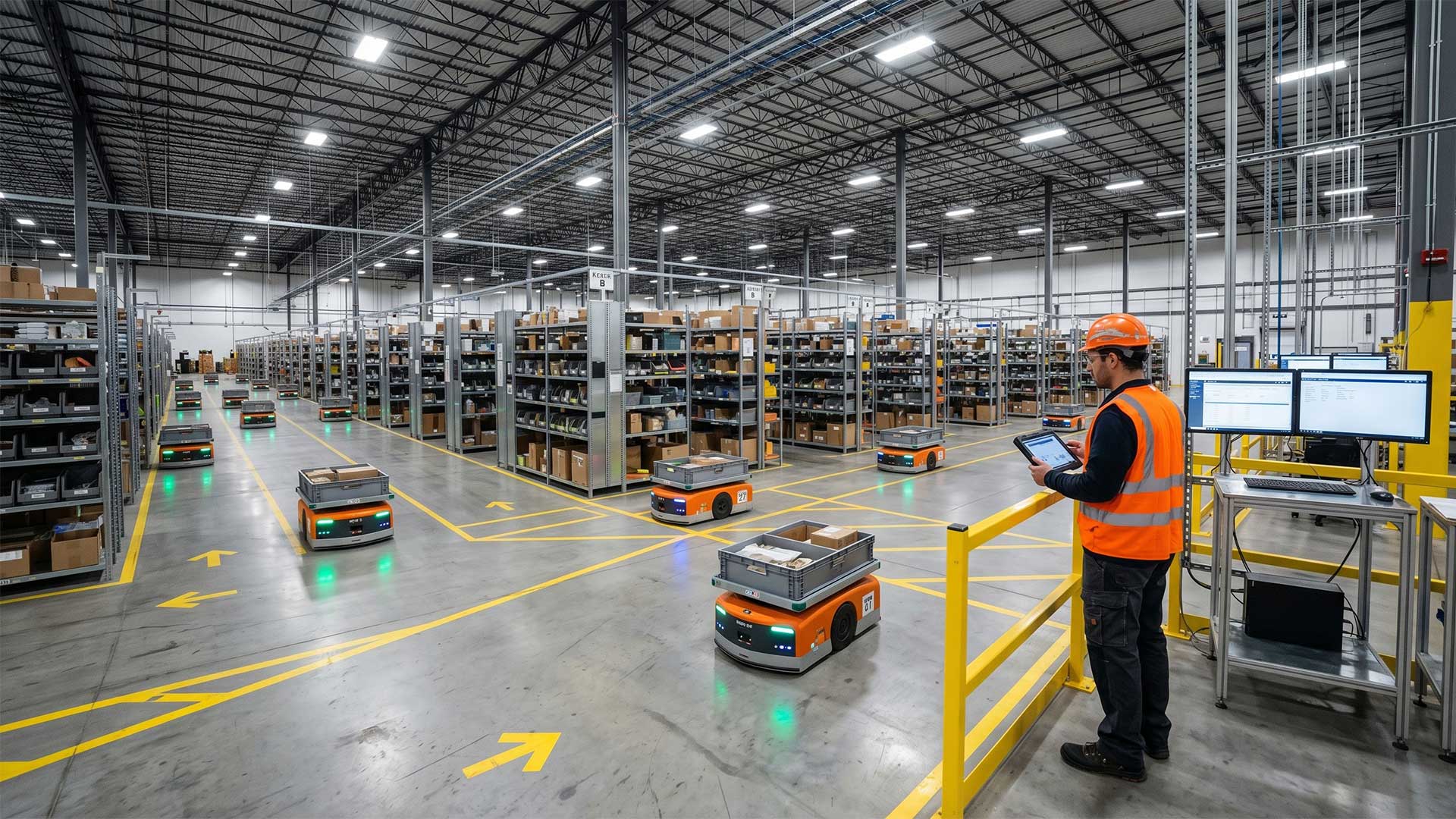
A robotics technician is troubleshooting a mobile unit on a warehouse floor. The simulation requires them to follow the diagnostic sequence, identify the fault, and determine whether the repair can be done safely in the field or requires a full shutdown. Skip a step, and the simulation shows what happens — not as a punitive “game over” but as a realistic consequence that teaches why the step matters.
These scenarios work because they activate the same cognitive processes the worker uses on the job. They practice the decision, not just the knowledge behind it. And they do it in an environment where the cost of a wrong choice is a learning moment, not a safety incident.
Capturing expert knowledge before it walks out the door
This problem is one of the most expensive and least visible risks in manufacturing and field operations. When a 25-year veteran retires, the organization loses decades of accumulated judgment — the subtle diagnostic skills, the situational awareness, the pattern recognition that no procedure manual captures.
Structured training programs are the most effective way to extract and preserve this knowledge. The process starts by interviewing senior experts — not asking them “what should new hires know” but asking them “where do new hires make mistakes” and “what do you know now that you wish someone had taught you on day one.” These interviews surface the decision points and judgment calls that separate competent performance from expert performance.
Those decision points become scenarios in the training program. The expert’s knowledge isn’t captured as a document that sits in a shared drive — it’s embedded in an interactive learning experience that every new hire works through. The expert’s judgment scales across the entire workforce, and it persists long after the expert has left.
One automation group we worked with had senior engineers spending roughly 8 hours per week repeating walkthroughs for new technical hires. After building structured, audience-specific learning paths from the experts’ knowledge — theory and simulation for engineers, hardware practice for field teams, unified product language for sales — new staff reached deployment readiness in 11 weeks instead of 16. The senior engineers got their time back, and the knowledge stopped being a bottleneck.
Training field workers who don’t sit at desks
Manufacturing floor workers, utility field crews, warehouse operators, and construction teams share the same constraint as healthcare frontline staff: they don’t have desks, dedicated training time, or 60 uninterrupted minutes. Safety training that requires a computer lab and a full morning will never reach the people who need it most — or it reaches them grudgingly, scheduled as overtime, and completed with minimal engagement.
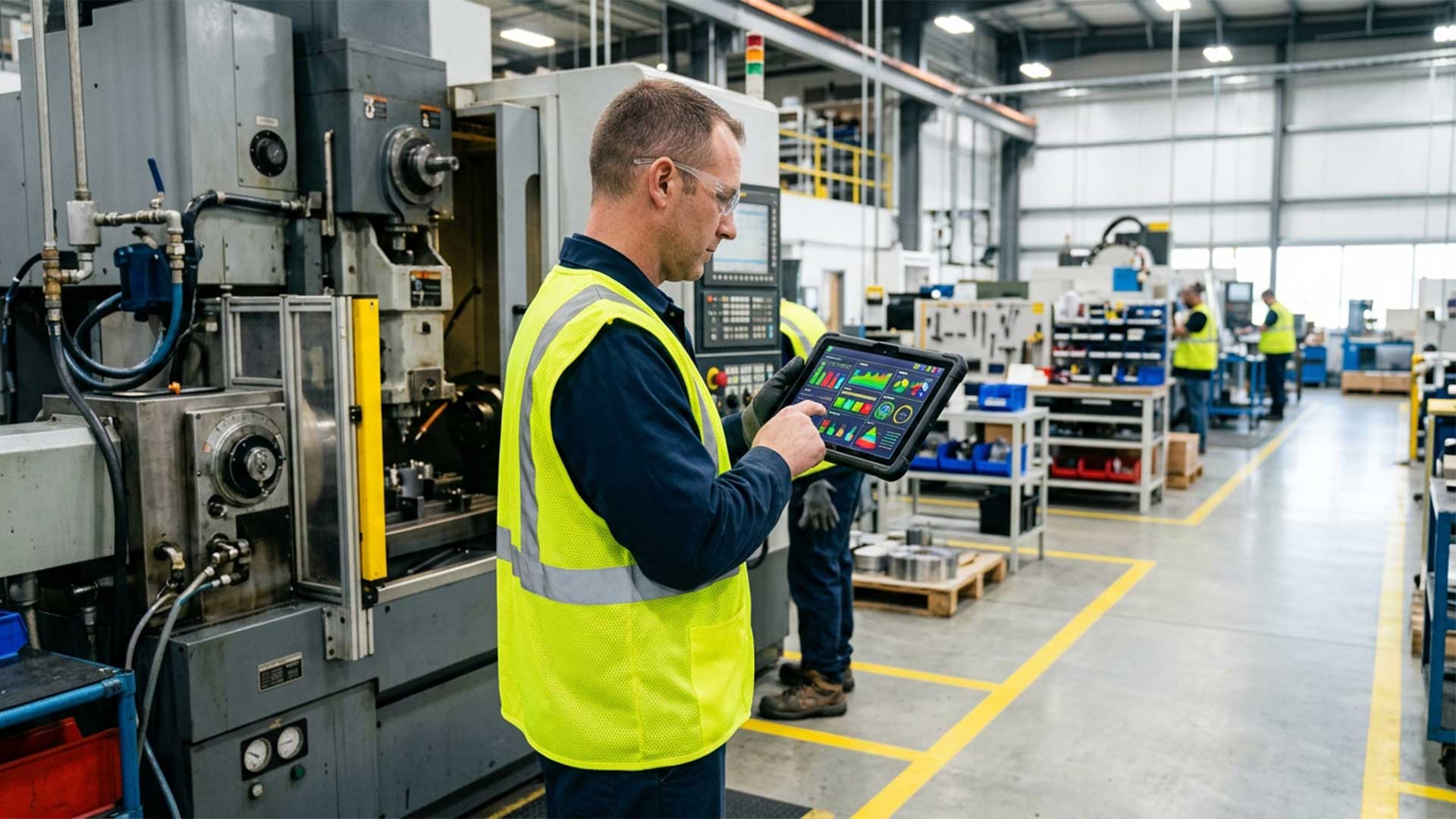
Mobile-first, shift-friendly design is the solution. Modules of 10 to 20 minutes that can be completed on a tablet in the break room or a phone in the truck between stops. Content that saves progress automatically so an interrupted session picks up where it left off. Scenarios designed for five-minute completion windows so workers can make meaningful progress in the gaps between tasks.
Video works particularly well for safety training in these environments. Workers can watch a real procedure being performed correctly, then attempt the same procedure in an interactive simulation. The combination of observation and practice produces stronger skill transfer than either modality alone — and video captures the physical context that text and illustrations can’t convey.
Multi-site consistency — same standard, every location
Organizations with multiple manufacturing plants, field offices, or operational sites face a consistency challenge: when each location trains independently, quality and safety standards vary by site. Some locations run rigorous programs with skilled trainers. Others rely on informal shadowing and outdated binders. The corporate safety record is only as strong as the weakest site.
Centralized eLearning eliminates this variation. Every worker at every location receives the same training content, the same scenarios, the same assessments, and the same competency thresholds — regardless of who their local supervisor is or how long they’ve been at the site. Completion and assessment data flow to a central dashboard so safety leadership has real-time visibility into training status across all locations.
This doesn’t mean eliminating site-specific content. The most effective programs use a two-layer structure: a core layer covering company-wide safety standards, regulatory requirements, and universal procedures, and a site-specific layer covering the equipment, hazards, and protocols unique to each location. The core layer ensures consistency. The site layer ensures relevance.
Measuring safety training impact
Safety training measurement goes beyond completion rates — and the data you need already exists in systems you’re already using.
Incident rates are the primary outcome metric. Track total recordable incidents, lost-time injuries, and near-miss reports before and after training programs launch. A reduction in incidents is the clearest evidence that training is changing behavior on the floor.
Near-miss reporting rates are a leading indicator that’s often counterintuitive: an increase in near-miss reports after safety training often signals success, not failure. It means workers are identifying and reporting hazards they previously ignored or didn’t recognize. A workforce that reports more near-misses is a workforce that’s paying closer attention — and catching problems before they become incidents.
Audit and inspection findings connect training to regulatory compliance. If your last OSHA inspection or internal safety audit flagged documentation gaps, inconsistent procedures, or inadequate training records, the post-training audit is where you prove the program closed those gaps.
Time-to-competency for new hires measures onboarding effectiveness. If new technical staff previously took 16 weeks to reach deployment readiness and the structured training program brings that to 9 weeks, the productivity gain multiplied across every hire is the ROI case for the program.
The cost equation in high-consequence industries
The ROI of safety training is uniquely compelling because the cost of not training is so high. A single serious workplace injury can cost $50,000 to $200,000 in direct costs — medical expenses, workers’ compensation, investigation time, regulatory fines. The indirect costs — production disruption, overtime to cover absent workers, equipment damage, and the morale impact on the team — typically multiply the direct cost by three to five times.
An OSHA citation for a serious violation averages $16,000 per instance. Willful violations can exceed $160,000 each. And beyond the financial cost, every preventable injury represents a human failure that a better training program could have prevented.
When a structured safety training program reduces incident rates by even 20%, the annual savings dwarf the development cost. The program doesn’t just pay for itself — it pays for itself many times over. And unlike most training ROI calculations, the safety case doesn’t require assumptions about soft metrics. The data is hard, the costs are documented, and the connection between training and outcomes is direct.
If your safety training is checking the OSHA box without changing behavior on the floor, if your incident rates have plateaued despite annual refreshers, or if your best people’s knowledge is locked in their heads instead of embedded in your training program — the content isn’t the problem. The approach is.