
When an organization decides it needs training, one of the first questions that surfaces is whether to buy existing courses or build something custom. It’s a legitimate question — and the answer depends on factors that most people don’t consider until they’ve already spent the money.
Off-the-shelf courses have their place. So does custom eLearning. The goal isn’t to declare one universally better than the other. It’s to help you choose the right approach for your specific situation, budget, and goals.
When off-the-shelf makes sense
Off-the-shelf courses are pre-built training modules available from content libraries like LinkedIn Learning, Udemy Business, Skillsoft, or Go1. They cover broad topics — communication skills, project management fundamentals, basic cybersecurity awareness, Microsoft Office proficiency — and they’re available immediately.
The advantages are clear. Speed of deployment means you can give employees access to training within days, not months. Cost per learner is low, especially at scale. And for genuinely generic skills that don’t vary by company — how to use Excel pivot tables, for example — the content quality from major providers is solid.
Off-the-shelf works best when the skills being taught are universal, not company-specific. When you need training deployed quickly with minimal customization. When your audience is small and a custom build isn’t cost-justified. And when the training topic has a low risk of obsolescence.
When custom eLearning is the clear winner
Custom eLearning is purpose-built training designed specifically for your organization, your learners, and your business challenges. It’s developed from scratch to address the exact performance gaps you’ve identified.
Custom is the right choice when your training involves company-specific processes, systems, or workflows. When the topic has regulatory or compliance requirements unique to your industry. When engagement and retention are critical — because your current generic training isn’t working. When you need to simulate real-world decisions your employees face on the job. And when the training will be delivered at scale to hundreds or thousands of learners.
Here’s the reality that most vendors won’t tell you: industry data shows off-the-shelf courses have completion rates that average between 20% and 35% in most organizations. Custom eLearning, when designed well, consistently achieves completion rates of 75% to 95%. That gap isn’t about the technology. It’s about relevance.
Comparing the five factors that matter
Cost is the most obvious difference. Off-the-shelf courses cost $20 to $50 per learner per year. Custom eLearning costs $3,000 to $9,000 per module to develop, depending on interactivity and complexity. But cost-per-learner drops dramatically at scale. A $7,000 custom module delivered to 1,000 learners costs $7 per learner — comparable to off-the-shelf, but with significantly higher engagement.
Time to deploy favors off-the-shelf. You can have courses live within a week. Custom development takes 4 to 12 weeks depending on complexity.
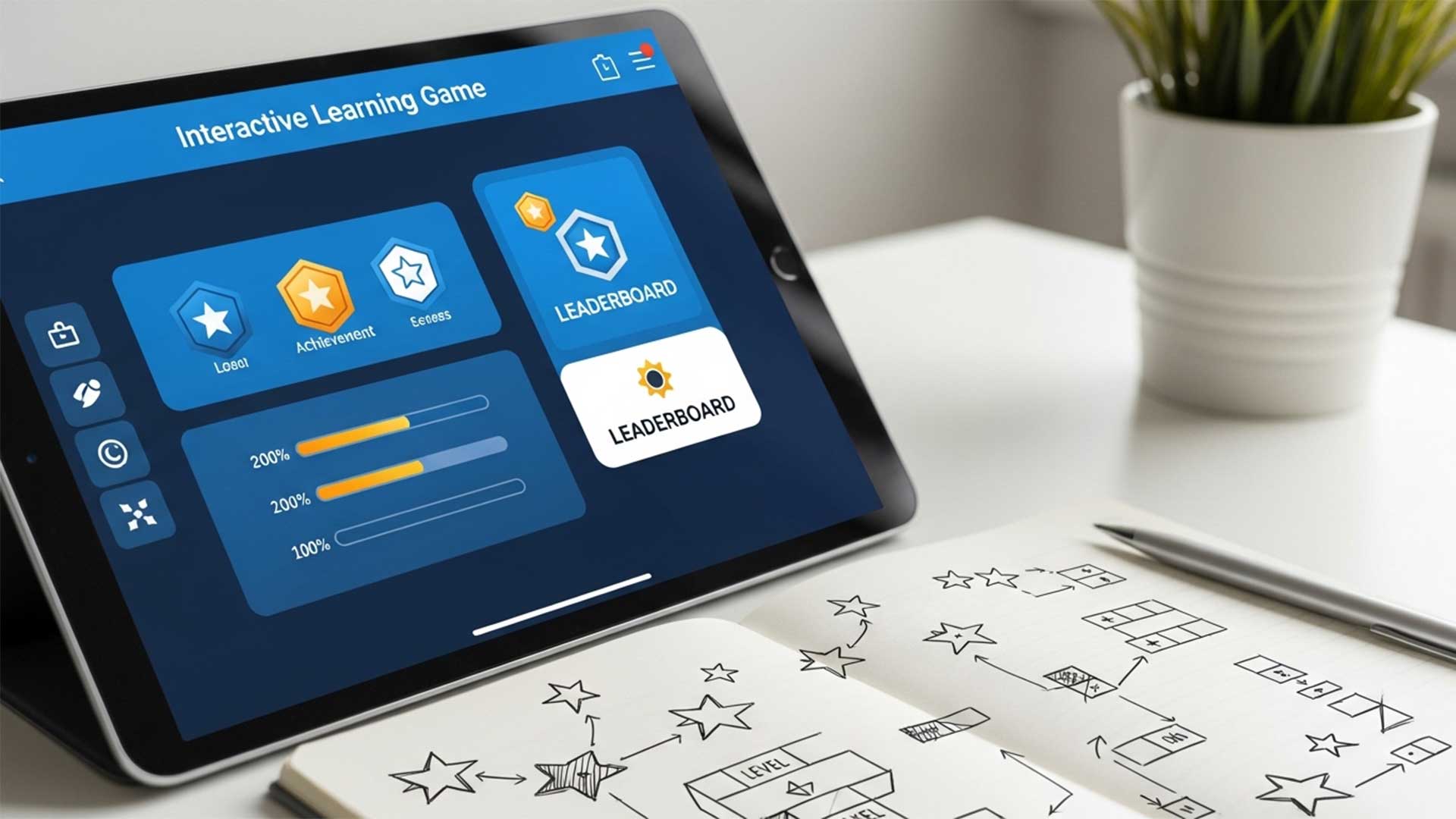
Engagement and retention is where custom dominates. Scenario-based learning, branching narratives, interactive simulations, and gamified elements aren’t possible with most off-the-shelf content.
Scalability is a draw. Both approaches scale well, but custom content scales with consistency — every learner gets the same tailored experience.
Long-term ROI favors custom when the training addresses a measurable business problem. If your onboarding program reduces ramp-up time by 30 days, the ROI calculation is straightforward and compelling.
The hybrid approach most smart organizations use
The most effective L&D strategies use both — off-the-shelf for generic skill building and compliance awareness, custom eLearning for the high-stakes, company-specific training that directly impacts performance.
Think of it as a portfolio approach. Use off-the-shelf for the 60% of training needs that are universal. Invest in custom for the 40% that’s unique to your business and tied to measurable outcomes. That’s how you maximize budget while ensuring the training that matters most actually works.