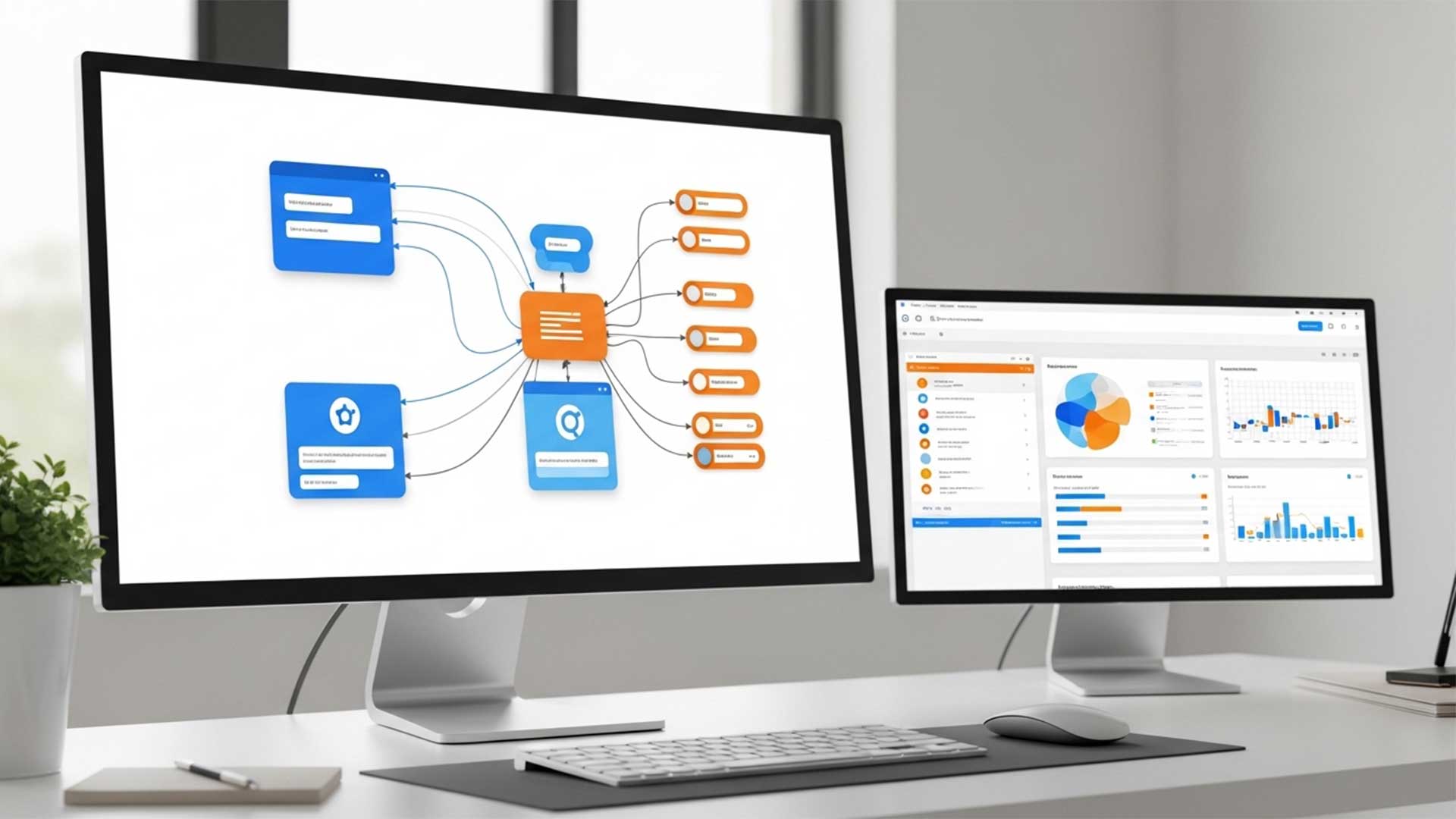

If you’ve ever been in a meeting where someone mentioned SCORM or xAPI and you nodded along while quietly hoping nobody asked you to explain the difference, this article is for you. These two standards are foundational to how eLearning content communicates with your LMS — but the technical jargon surrounding them often obscures what L&D leaders actually need to know to make good decisions.
Here’s the practical guide, stripped of unnecessary technical detail.
What SCORM does — and does well
SCORM stands for Sharable Content Object Reference Model. It’s been around since 2001, and it’s the most widely supported eLearning standard in the world. If you buy or build an eLearning course and want to host it on an LMS, SCORM is almost certainly how the two will communicate.
SCORM does three things reliably. It launches content from the LMS in a consistent way. It tracks completion — whether a learner started, is in progress, or finished the course. And it records assessment scores — pass, fail, and the specific percentage.
That’s essentially it. SCORM is a one-way street: the LMS launches the content, and the content reports back a limited set of data. It works everywhere, it’s supported by virtually every LMS and authoring tool on the market, and for the majority of eLearning use cases, it does exactly what you need.
The current version most organizations use is SCORM 1.2 or SCORM 2004. If someone asks which to use, SCORM 1.2 is simpler and more universally compatible. SCORM 2004 adds sequencing and navigation features, but compatibility can be slightly less predictable across LMS platforms.
What xAPI does differently
xAPI — also called the Experience API — was released in 2013 as a more flexible successor to SCORM. Where SCORM tracks whether someone completed a course in an LMS, xAPI can track virtually any learning experience, anywhere.
The core concept is the “statement” — a simple structure that records: Actor (who did it), Verb (what they did), Object (what they did it to). For example: “Jane completed the compliance simulation” or “Marco watched the product demo video” or “Aisha attended the leadership workshop.”
These statements are stored in a Learning Record Store — a database that collects learning data from any source, not just the LMS. This means xAPI can track eLearning courses on an LMS, but also videos watched on an external platform, in-person training attendance, on-the-job task completion, mobile learning activities, and even performance support tool usage.
The promise of xAPI is a complete picture of how people learn across your entire ecosystem — not just inside your LMS.
The practical differences that matter for decisions
For most standard eLearning deployments — self-paced courses hosted on an LMS — SCORM works perfectly. It’s simpler to implement, universally supported, and gives you the data you need: who completed what, when, and how they scored.
Choose xAPI when you need to track learning that happens outside the LMS — in blended programs, on-the-job activities, or a learning ecosystem that spans multiple platforms. It’s also the right choice when you want to correlate learning data with performance data from other systems.
The tradeoff is complexity. xAPI requires a Learning Record Store (either standalone or built into your LMS), more careful data architecture, and a clear plan for what you’ll actually do with the richer data you collect. Without that plan, you’re collecting data for its own sake.
Using both — the smart approach
SCORM and xAPI aren’t mutually exclusive. Many organizations use both, strategically. SCORM packages for standard eLearning content hosted on the LMS — because it’s simple, reliable, and universally supported. xAPI tracking for everything else — blended programs, mobile learning, external content, and on-the-job performance tracking.
This hybrid approach gives you the simplicity of SCORM where it’s sufficient and the flexibility of xAPI where you need it. The key is choosing the right standard for each use case, not adopting one exclusively.
What to ask your vendors
When evaluating LMS platforms or authoring tools, ask these questions: Does the LMS support both SCORM 1.2 and SCORM 2004? Does the LMS include a built-in Learning Record Store, or do you need a separate one for xAPI? Can the authoring tool publish in both SCORM and xAPI formats? And if you’re considering xAPI: do you have a clear data strategy for what you’ll track and how you’ll use it?
The standard doesn’t matter if you don’t have a plan for the data it produces. Start with what you need to measure, then choose the technology that measures it.