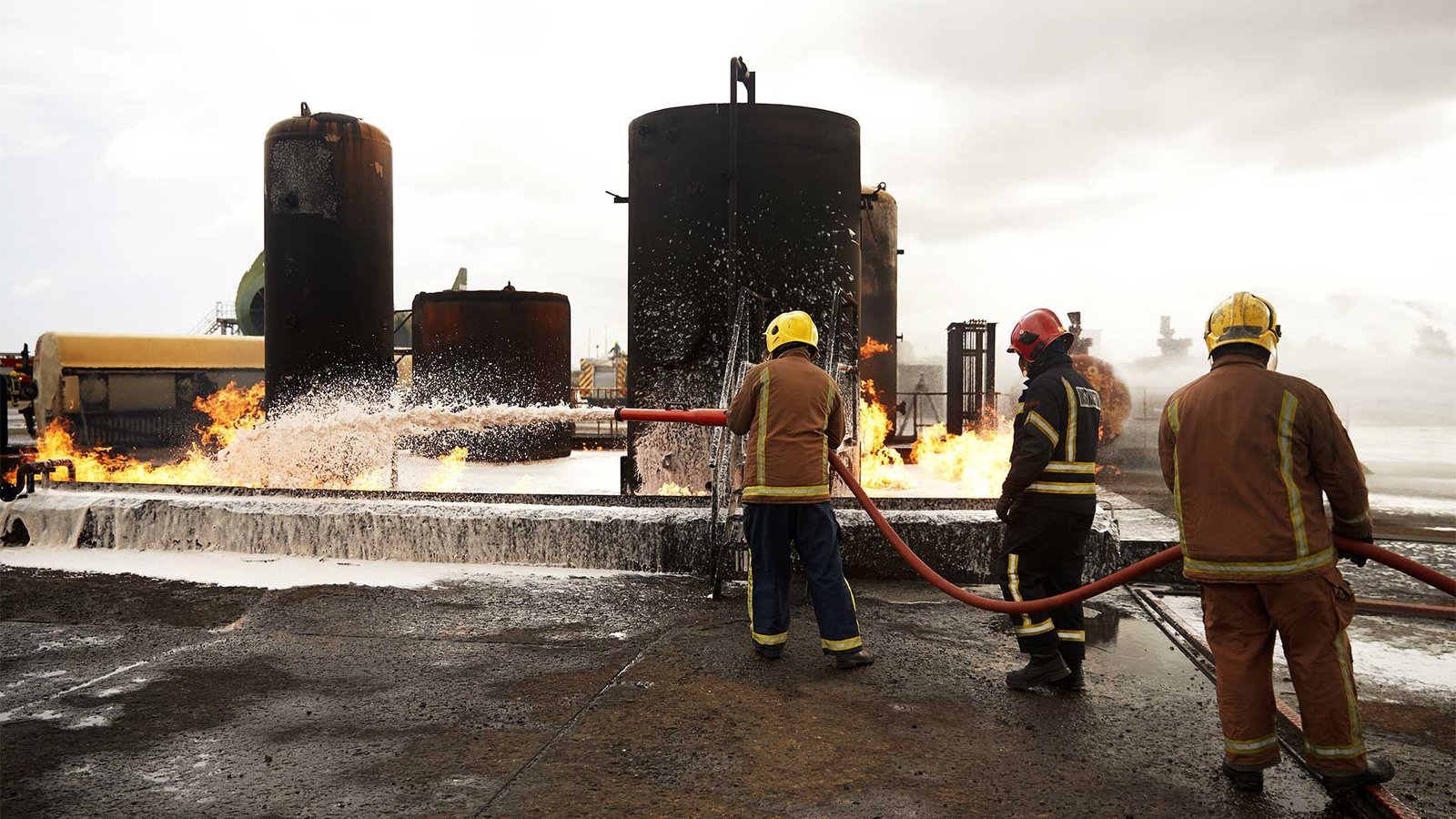
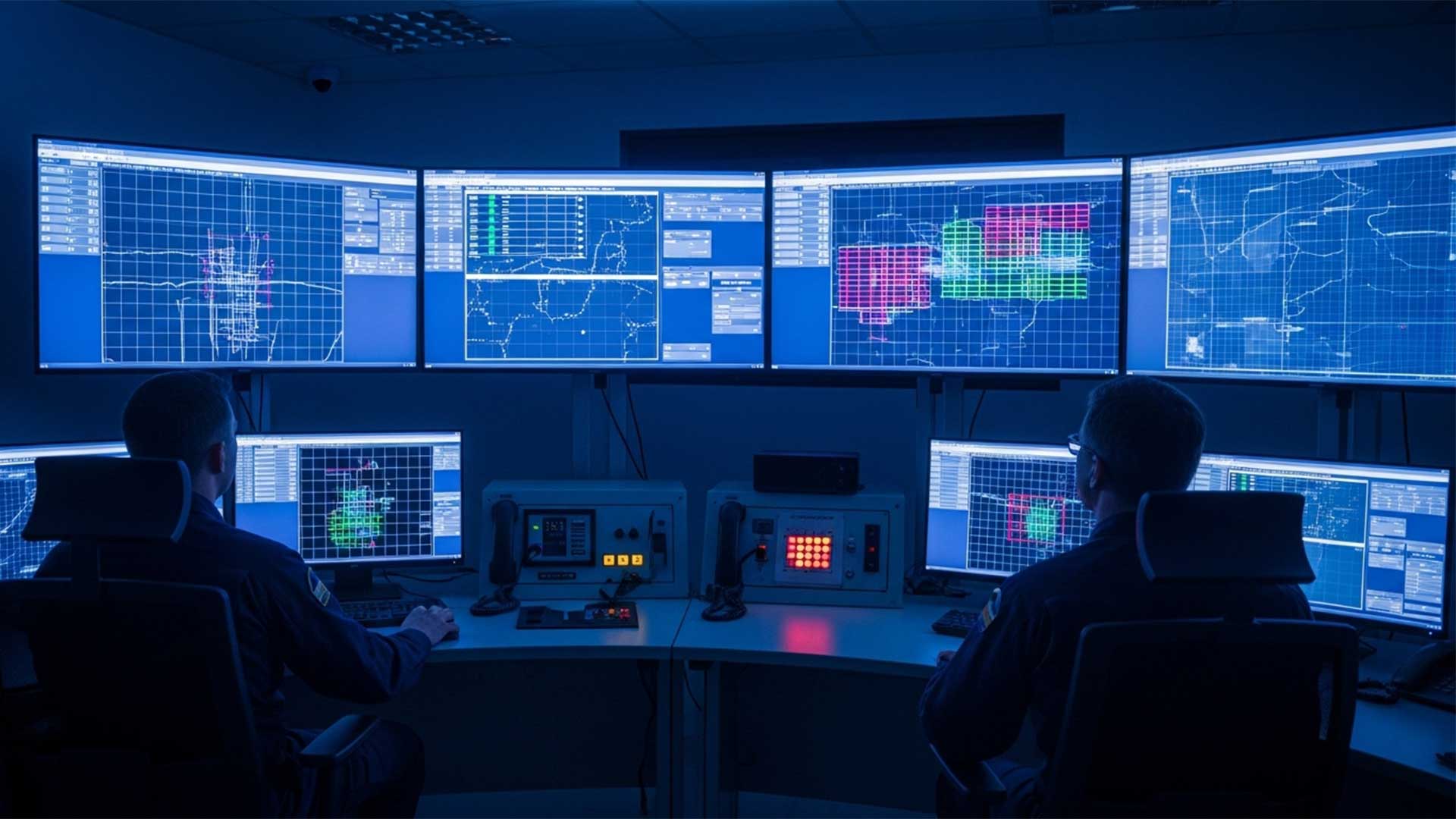
A naval defense branch needed its crews trained on shipboard fire re-entry procedures. The traditional approach was live exercises — effective but expensive, logistically complex, and limited to a few training cycles per year. Between exercises, crew readiness degraded. When an actual fire event occurred, the gap between the last training exercise and the real situation was measured in months.
This is the fundamental challenge of defense training: the environments are high-consequence, the procedures are critical, and live training — while irreplaceable for certain skills — cannot run frequently enough to maintain continuous readiness across an entire force.
Simulation-based eLearning doesn’t replace live exercises. It fills the gap between them — maintaining procedural knowledge, building decision-making judgment, and ensuring that when personnel enter a live exercise or a real situation, they’re starting from a baseline of competency rather than from cold.
What makes defense training different
Five factors distinguish defense and military training from commercial environments.
The first is consequence severity. In corporate training, poor performance costs money. In defense, poor performance costs lives. This isn’t hyperbole — it’s the design constraint that shapes every decision about training content, assessment rigor, and competency standards. When a sailor makes a wrong decision during a shipboard fire, the margin for error is zero.
The second is classification and security. Defense training content often involves sensitive procedures, equipment specifications, and tactical doctrine that cannot be hosted on commercial cloud platforms or accessed from personal devices. The training infrastructure must comply with the security requirements of the defense organization — which may mean isolated networks, approved devices, and content review processes that add weeks to the development timeline.
The third is personnel rotation. Military units rotate personnel frequently. A crew that trained together six months ago may have 30% new members today. The training program must bring new personnel to competency quickly while maintaining the team’s collective readiness. Individual competency and team competency are both training objectives.
The fourth is readiness as the metric. Commercial training measures learning outcomes, behavior change, and business impact. Defense training measures readiness — the ability to execute procedures correctly under stress, with degraded resources, in conditions that don’t match the training environment perfectly. Readiness is harder to measure than completion rates, but it’s the only metric that matters.
The fifth is multinational interoperability. Allied forces train together but operate under different doctrines, procedures, and languages. Training programs that serve multinational environments must accommodate these differences while building the shared competency required for joint operations.
Simulation-based training: bridging the gap between exercises
Live training exercises are the gold standard for building tactical competency. They’re also expensive, time-constrained, and infrequent. A large-scale naval exercise might happen twice a year. The skills practiced during that exercise begin degrading within weeks.
eLearning-based simulations maintain readiness between live exercises through three mechanisms.
Procedural reinforcement keeps step-by-step procedures fresh. A monthly simulation where crew members walk through emergency response procedures — in sequence, under time pressure, with decision points that test judgment — prevents the procedural decay that occurs between exercises. The simulation doesn’t replicate the physical stress of a live exercise, but it maintains the cognitive readiness that physical stress builds on.
Decision-making practice develops judgment for situations that can’t be safely replicated in live training. A scenario where a fire team leader must decide between two re-entry approaches based on incomplete information about the fire’s location and intensity builds the analytical skills that save lives in real incidents. Wrong decisions in the simulation produce consequences that teach without risking personnel.
Assessment and certification verify that individual competency meets the required standard. Instead of waiting for the next live exercise to discover that 20% of the crew can’t execute the emergency procedure correctly, regular simulation-based assessments identify gaps in real time so they can be addressed through targeted remediation.
We built shipboard fire re-entry training for a European naval defense branch that reduced training cycle costs by 29% compared to live-only delivery. Program completion reached 91% across all personnel. Crew confidence in re-entry decisions reached 4.3 out of 5. The simulation-based program now runs monthly, maintaining readiness that previously degraded between semi-annual live exercises.
Designing for security-constrained environments
Defense training content often cannot be developed or deployed using the same tools and platforms as commercial training. The security constraints shape the technical architecture.
Content development may require cleared personnel working in approved facilities. If the training involves classified procedures or equipment specifications, the development team needs appropriate security clearances and the work must be performed in environments that meet the classification requirements. This limits the pool of available development partners and adds time to the project.
Deployment infrastructure may be isolated from the internet. Training that runs on standalone networks or approved military systems requires packaging and delivery methods that work without cloud connectivity. This typically means SCORM packages deployed to local LMS instances rather than cloud-hosted platforms. Offline-capable content is essential for deployed units on vessels, bases, or field locations without reliable network access.
Content review and approval follows a different process than commercial training. Operational security review ensures the training content doesn’t reveal sensitive information if compromised. Doctrinal review ensures procedures match current doctrine. Technical review ensures equipment representations are accurate. These reviews add 2 to 8 weeks depending on classification level and organizational processes.
Building for rapid personnel rotation
When 30% of a unit’s personnel rotate every cycle, the training program runs continuously. New arrivals need to reach competency before the next exercise or deployment. Experienced personnel transferring from other units need to learn local procedures and equipment variations.
The effective approach is a layered onboarding structure. Layer one is universal — procedures and knowledge common to all personnel in that role, regardless of unit assignment. This content is built once and applies everywhere. Layer two is unit-specific — local procedures, equipment configurations, and team protocols that vary by assignment. This content is smaller and maintained by each unit.
New personnel complete the universal layer through self-paced eLearning, then receive unit-specific training through a combination of eLearning modules and supervised on-the-job practice. The universal content doesn’t need rebuilding for every rotation cycle. The unit-specific content is maintained as a living document that reflects current configurations.
Assessment gates between layers ensure personnel meet competency standards before advancing to unit-specific training or operational duties. These gates protect both the individual and the team — a crew member who hasn’t demonstrated proficiency in emergency procedures should not be assigned watch duties that require executing those procedures.
Measuring readiness, not completion
Defense training measurement must go beyond commercial metrics. Completion tells you who sat through the training. Readiness tells you who can execute when it matters.
Individual readiness is measured through scenario-based assessments that test decision-making under realistic conditions. Not multiple-choice recall questions — branching simulations where the individual must apply procedures correctly with time pressure and incomplete information. Performance is scored on accuracy, speed, and the quality of decision-making at each branch point.
Team readiness is measured through collective exercises — either live or simulated — where the team must coordinate to achieve an objective. eLearning can’t fully assess team dynamics, but it can prepare individuals so that when team exercises occur, the baseline competency is high enough to focus on coordination rather than individual remediation.
Readiness decay tracking monitors how competency degrades over time without reinforcement. If simulation assessment scores drop 15% between monthly cycles, the reinforcement frequency needs to increase. If scores remain stable, the current cadence is sufficient. This data-driven approach to training frequency replaces the calendar-based approach that trains on a fixed schedule regardless of whether the training is needed.
Unit readiness dashboards aggregate individual assessment data to give commanders a real-time view of their unit’s training posture. Which personnel are current on which certifications? Where are the competency gaps? Which procedures need the most reinforcement? This visibility turns training from a periodic event into a continuous readiness management tool.
Cost reduction without capability reduction
The value proposition of simulation-based eLearning in defense isn’t replacing live training. It’s reducing the cost per training cycle while maintaining or improving readiness.
Live exercises remain essential for skills that require physical performance, team coordination, and stress inoculation. But the preparatory knowledge, procedural familiarity, and individual decision-making practice that consume the first phase of most live exercises can be handled more efficiently through simulation.
When personnel arrive at a live exercise already proficient in the procedures and decision frameworks, the exercise time is spent on higher-value activities — team coordination, stress management, and edge-case scenarios that only live training can deliver. The simulation handles the foundation. The live exercise builds on it.
The 29% cost reduction in the naval fire training program came not from eliminating live exercises but from reducing the remediation time within them. When fewer crew members needed basic procedural instruction during the exercise, more exercise time was spent on advanced scenarios. Readiness improved while overall training cost decreased.
What to look for in a defense training partner
Experience with security-constrained environments is non-negotiable. If the partner hasn’t worked with classified or sensitive content, they’ll underestimate the timelines, misunderstand the approval processes, and potentially create security risks during development.
Scenario design capability matters more than visual polish. A well-designed decision scenario on a simple platform is more valuable than a visually stunning module with no decision practice. The training should build judgment, not just deliver information.
Offline and isolated network deployment experience is essential. If the training can’t run without internet access on approved hardware, it doesn’t work for deployed units.
And look for a partner who understands that defense training isn’t measured in satisfaction scores. It’s measured in whether people can execute when the situation demands it. Every design decision should serve that standard.