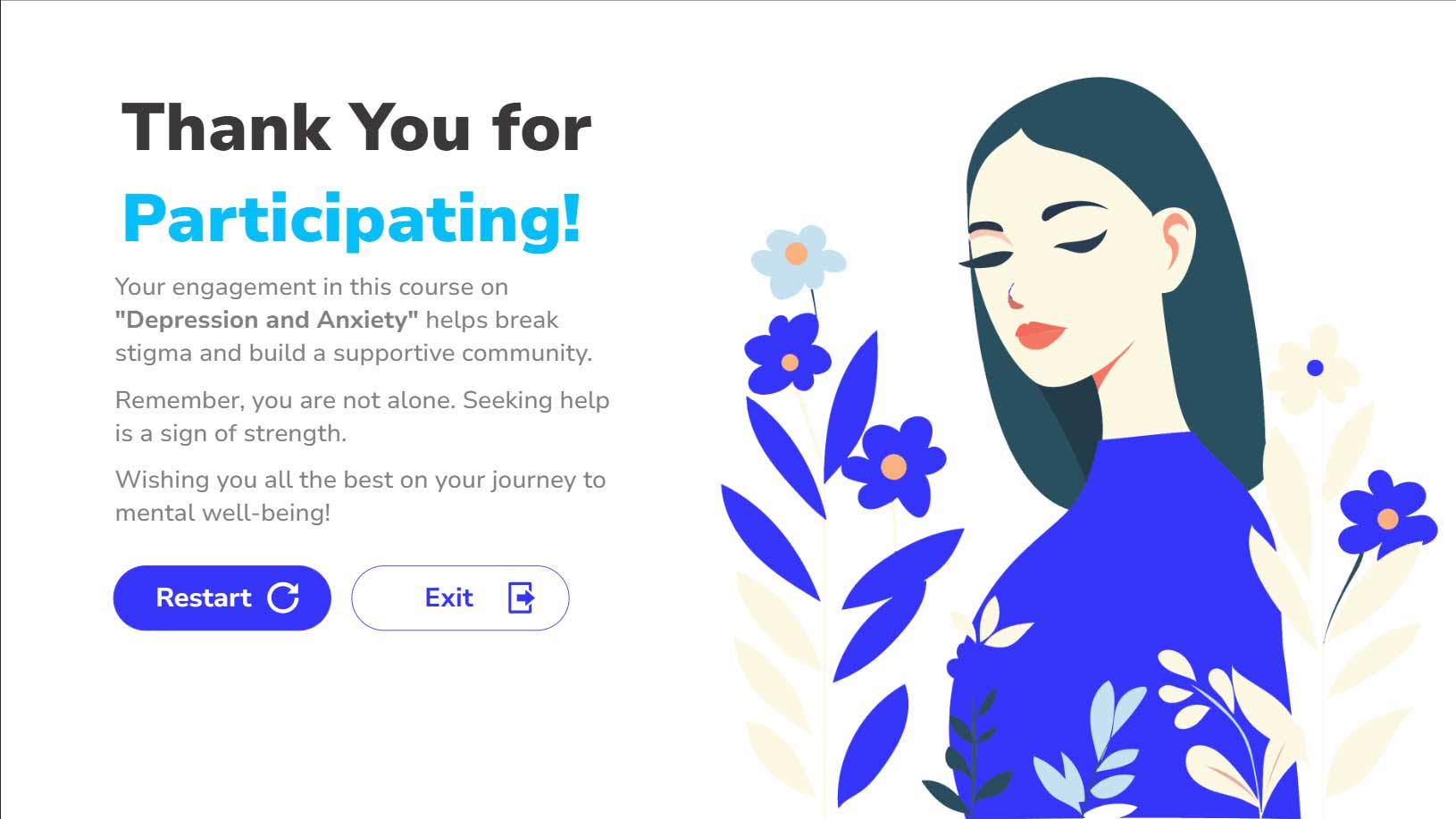
Transforming Clinical Research into a Narrative eLearning Experience
Reimagining Mental Health Education
About the project
Client
John E. Liljenquist, M.D.
Target Audience
Individuals seeking to understand the clinical roots of mental health.
Duration
3 Weeks
Seat time
60 Minutes (Estimated)
Tools Used
Articulate Storyline 360, Microsoft PowerPoint
LMS compatibility
SCORM 1.2 compliant, compatible with most standard LMS platforms
Accessibility compliance (WCAG)
WCAG 2.1 considerations applied including clear navigation, readable typography, and structured content hierarchy.
Goal
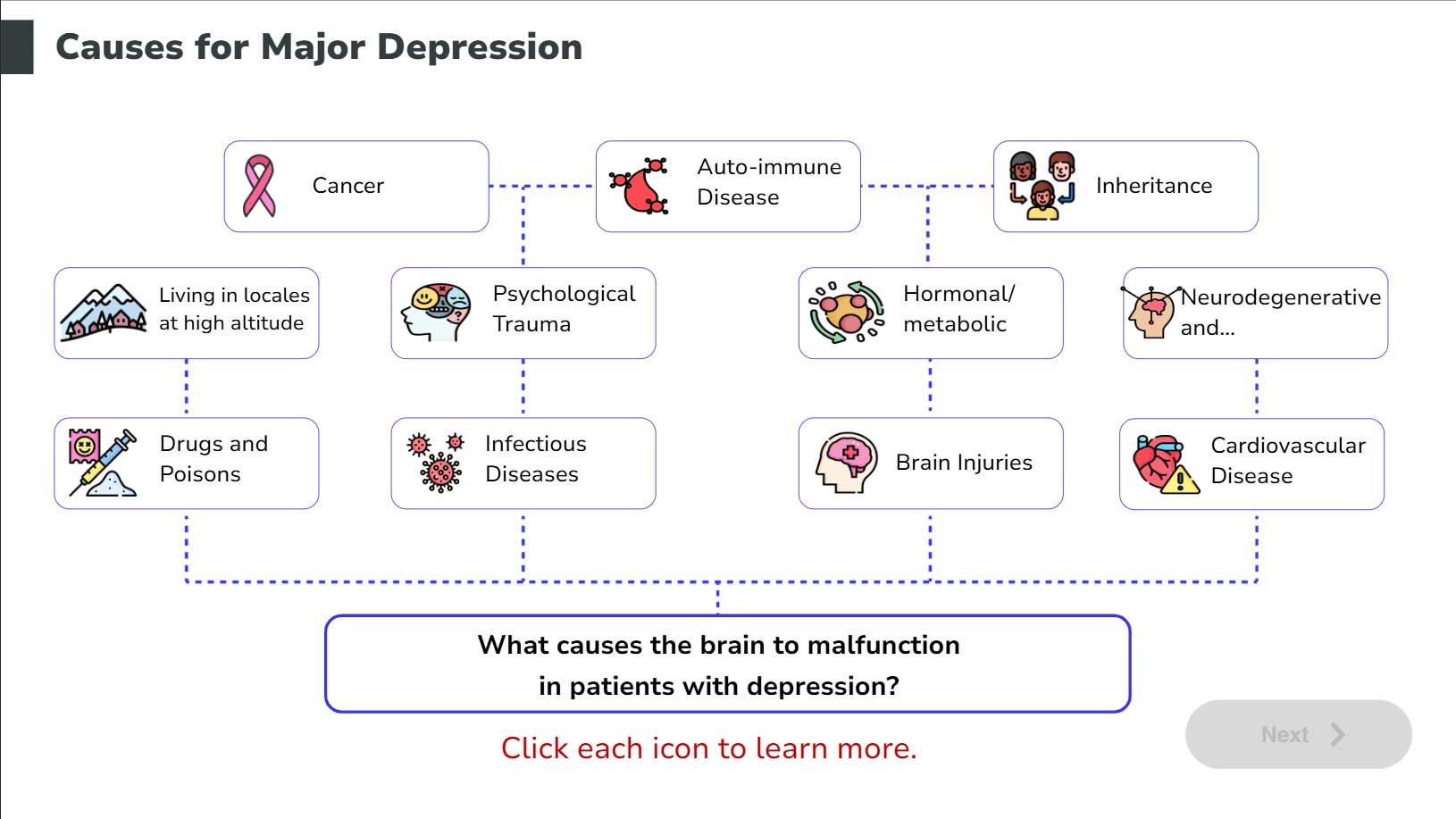
To move the narrative of depression away from "personal weakness" toward a clinical understanding of brain malfunction.
The Challenge: Bridging the Gap
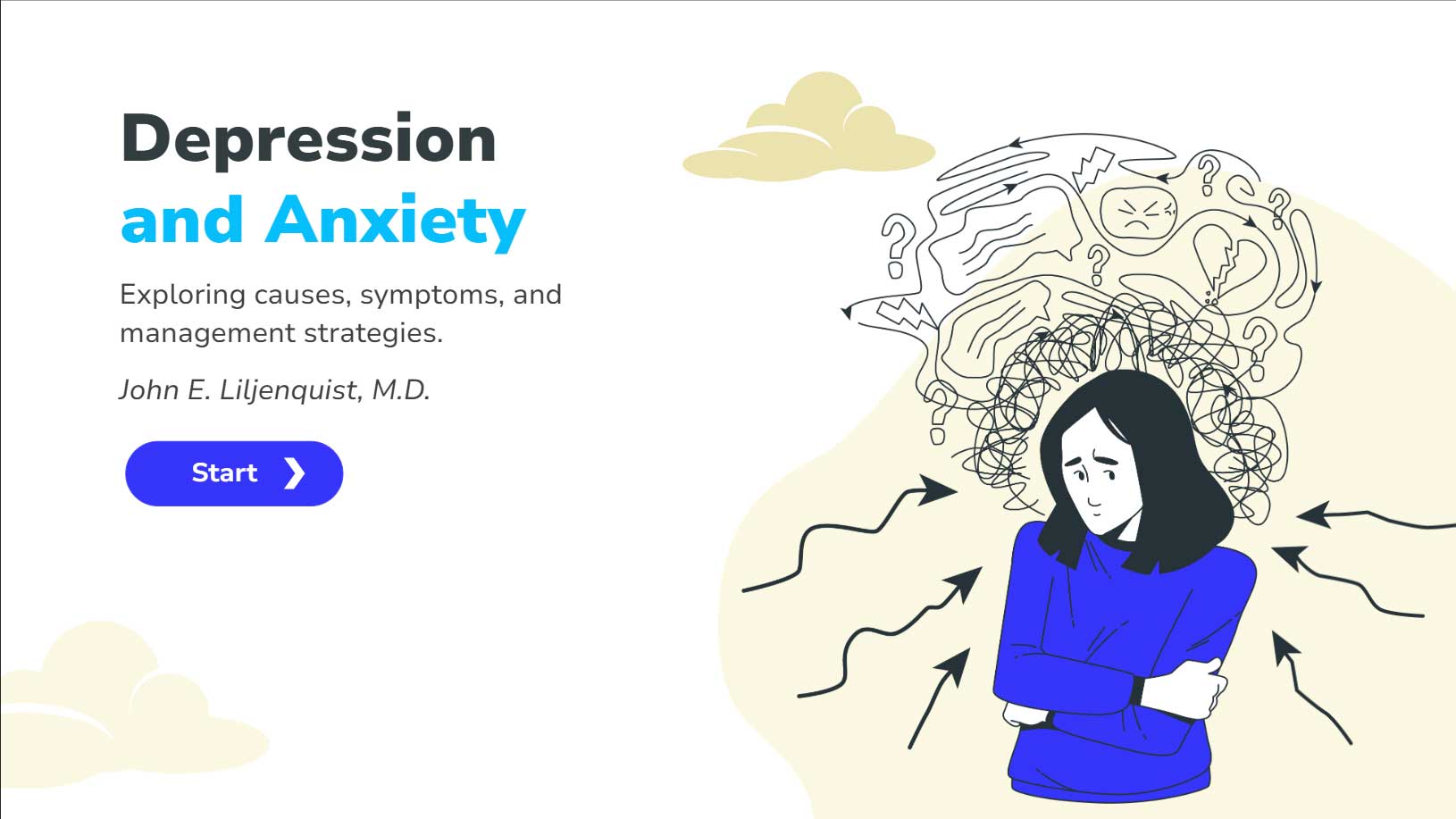
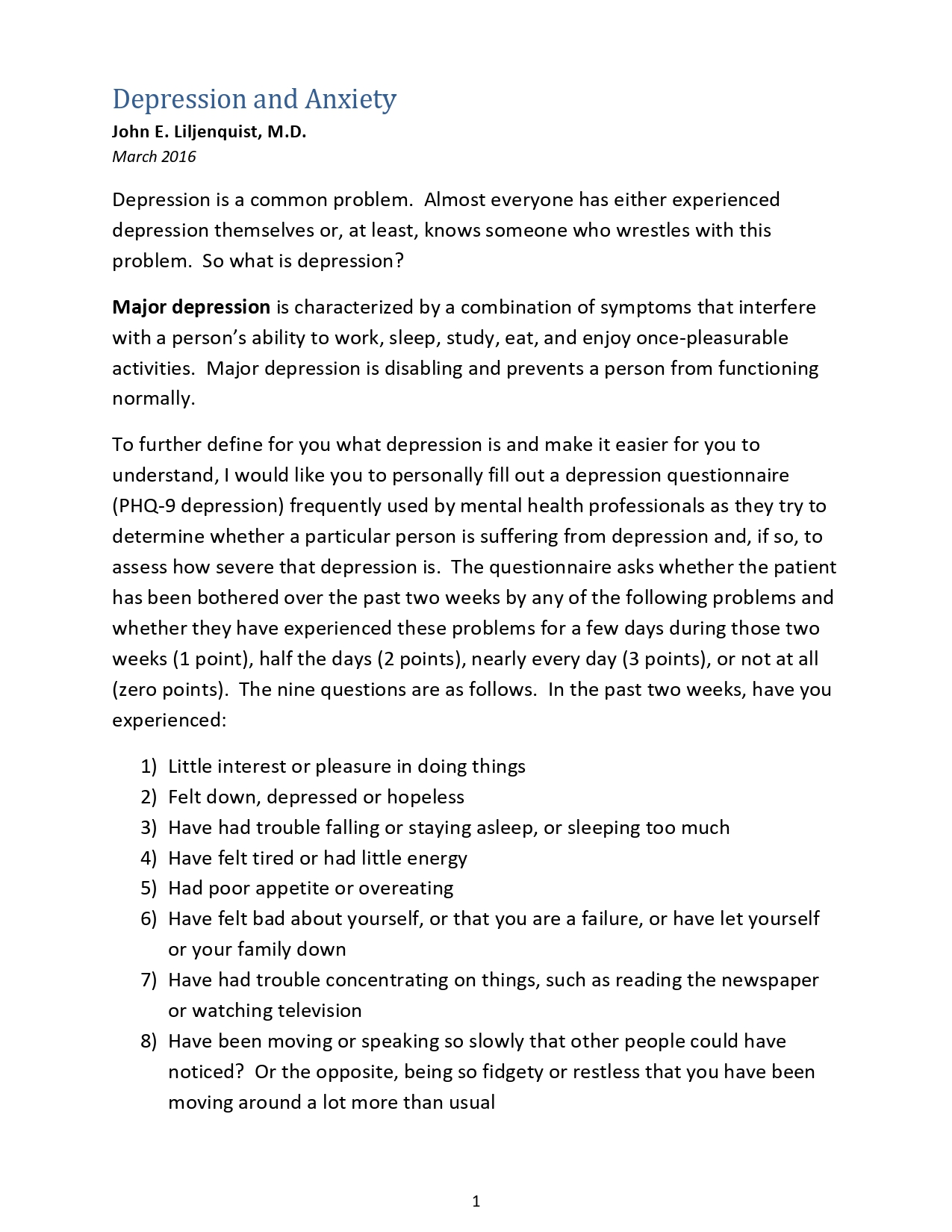
The primary challenge was the source material. Dr. Liljenquist’s research was highly academic and clinical. My task was to take this dense, text-heavy script and transform it into an empathetic, interactive journey that didn’t overwhelm the learner.
Instructional Design Approach
To ensure a high-quality result, I followed a rigorous three-phase development process:
Phase 1: Script Analysis
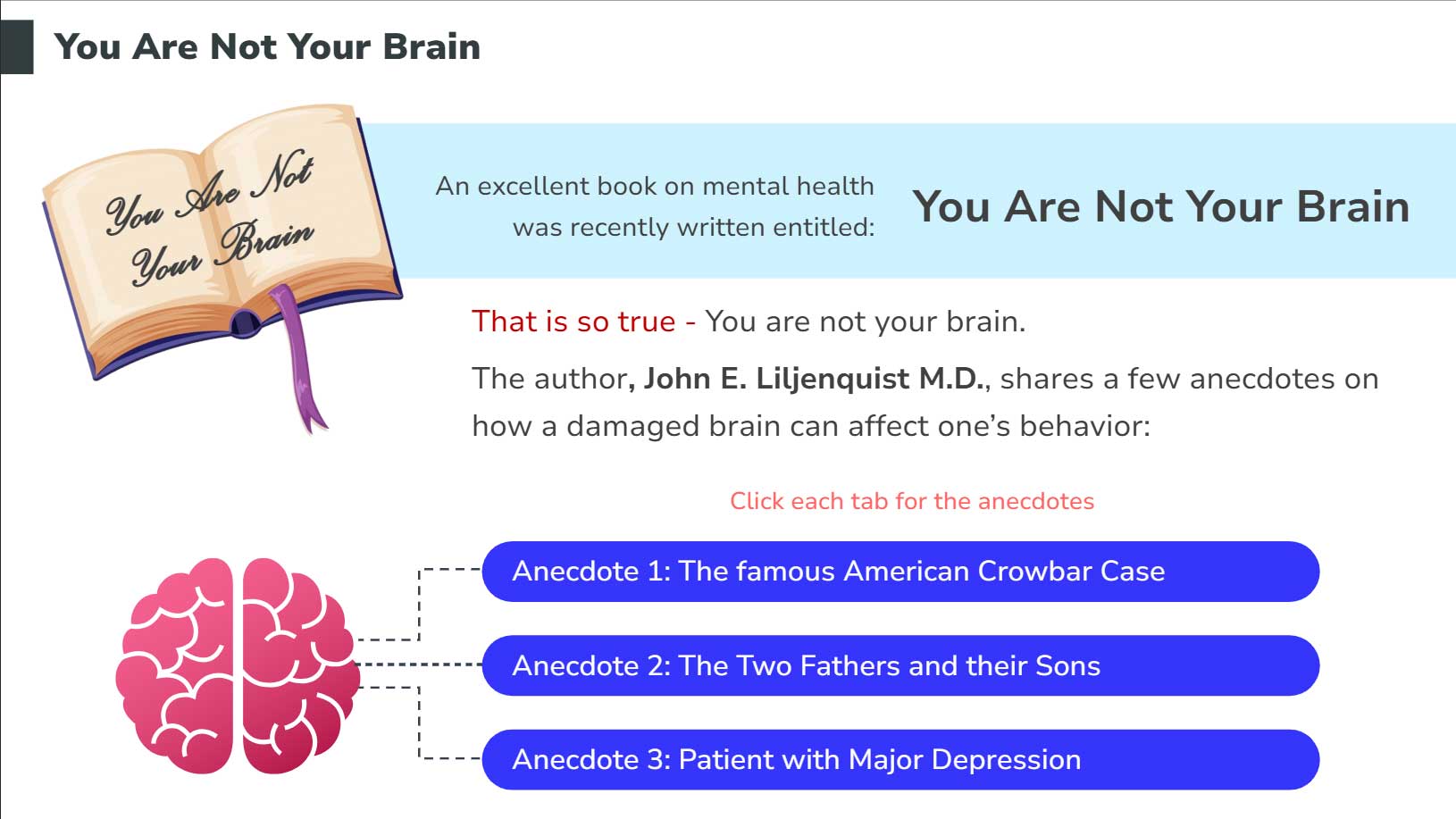
I began by identifying the core “Action Map”—extracting the most vital clinical markers and anecdotes, such as the “American Crowbar Case,” to use as narrative hooks.
Phase 2: Visual Storyboarding
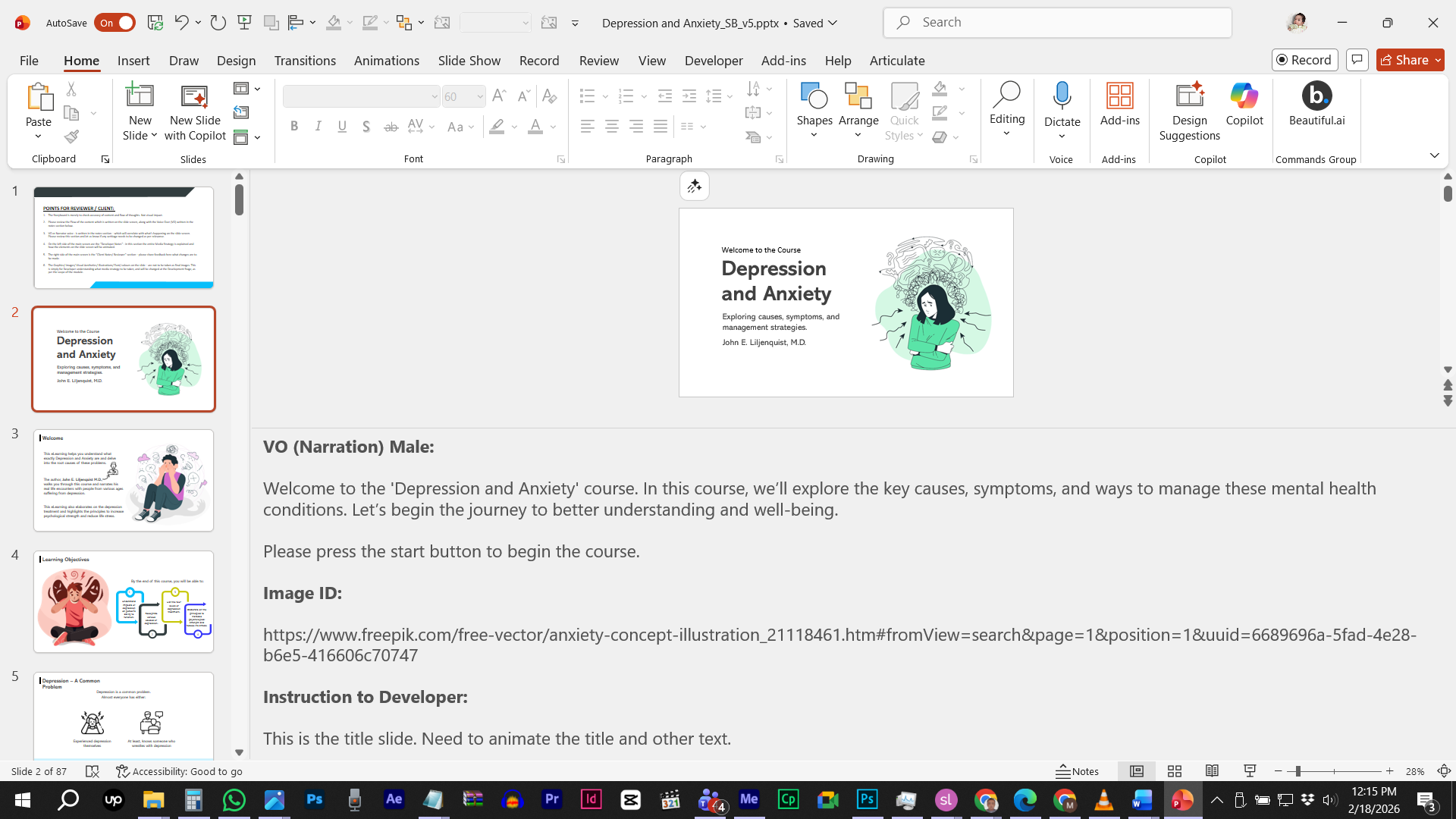
Before touching Storyline, I built a detailed storyboard in PowerPoint. This served as the blueprint for the client, mapping out narration (VO) and the “Media Strategy” for every slide.
Phase 3: Technical Development
The final phase was the build in Storyline 360. I focused on clean UI design, accessibility via synced audio, and high-level interactivity.
Featured Interactions
The Interactive PHQ-9 Assessment
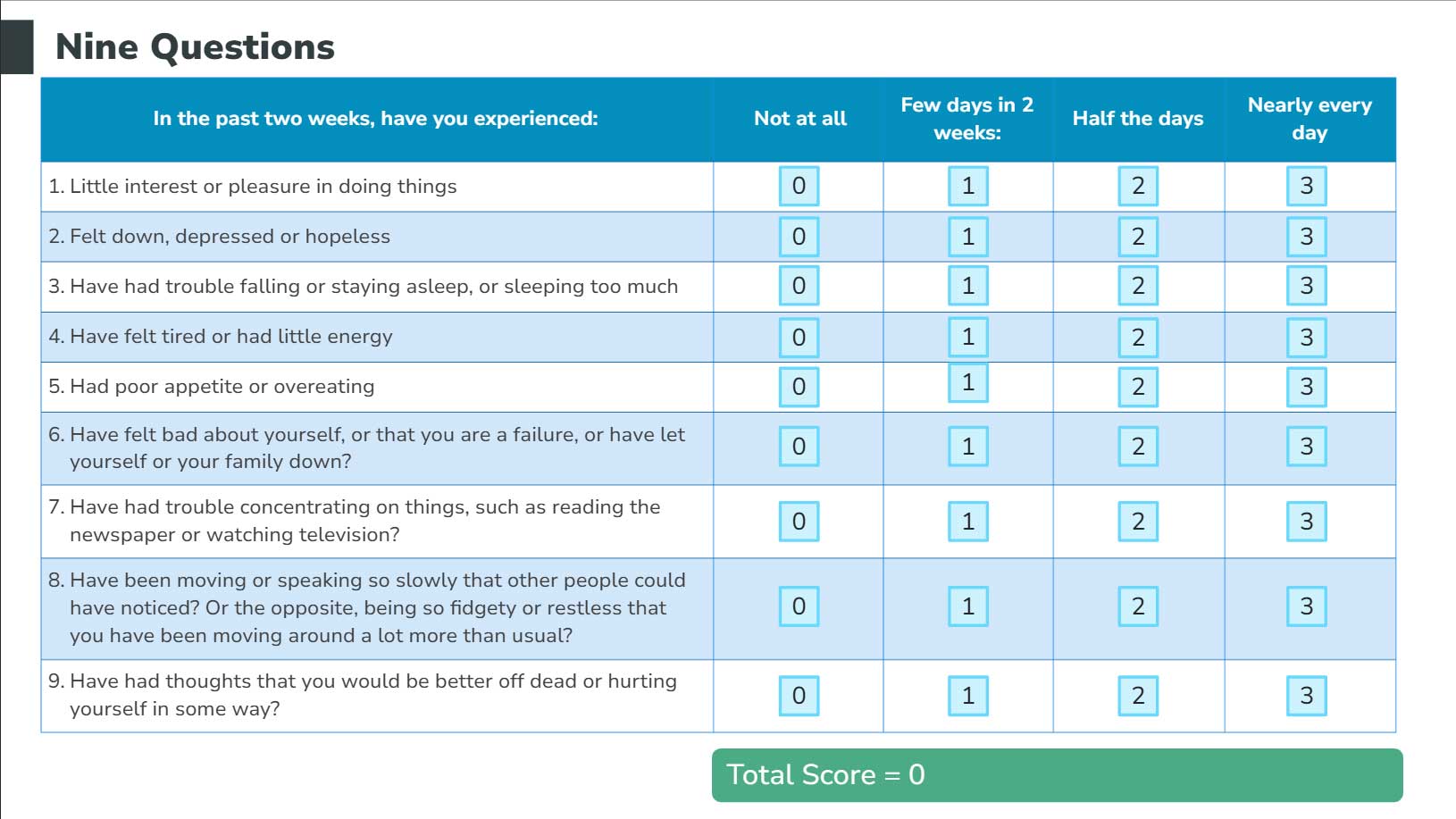
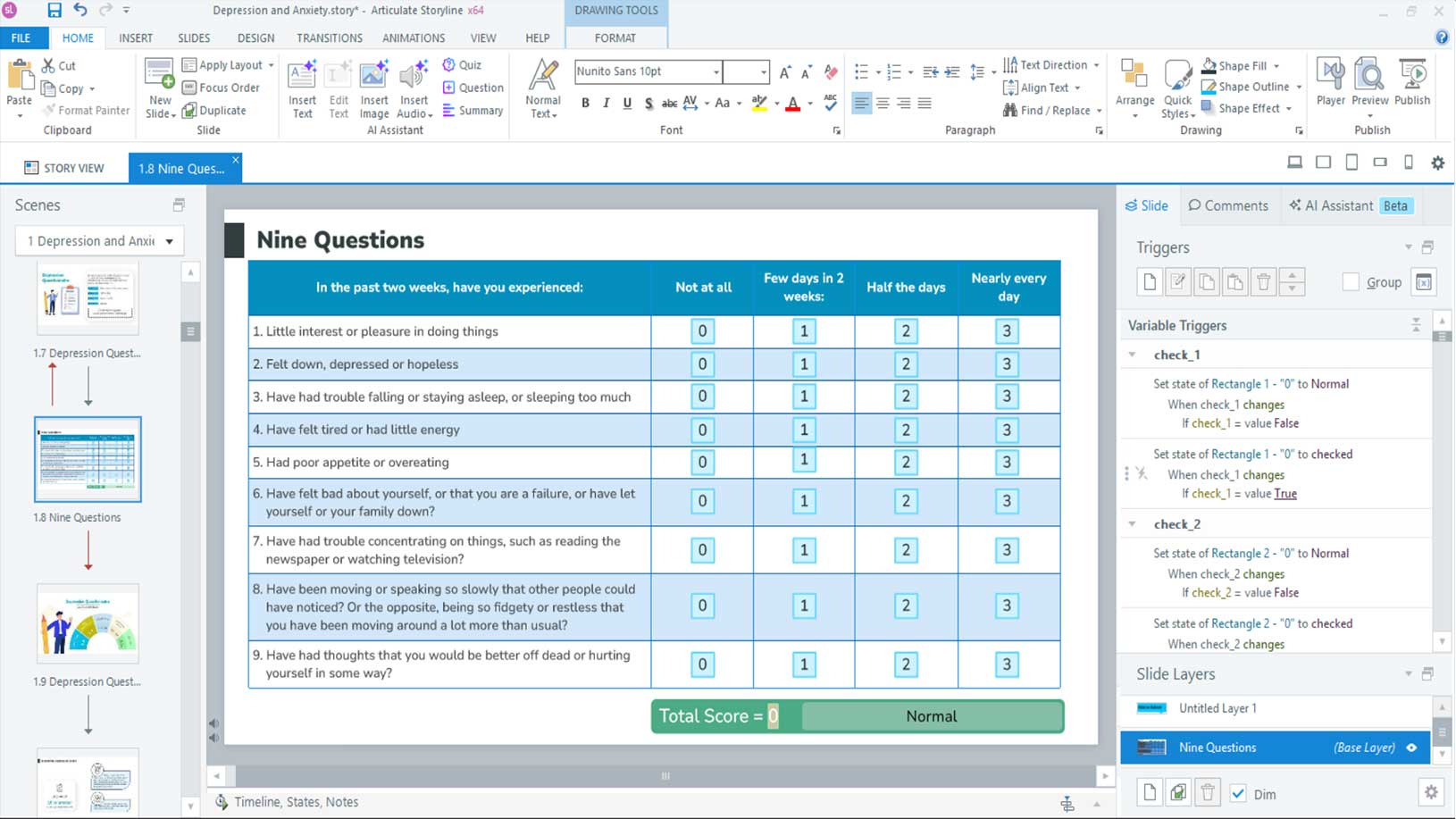
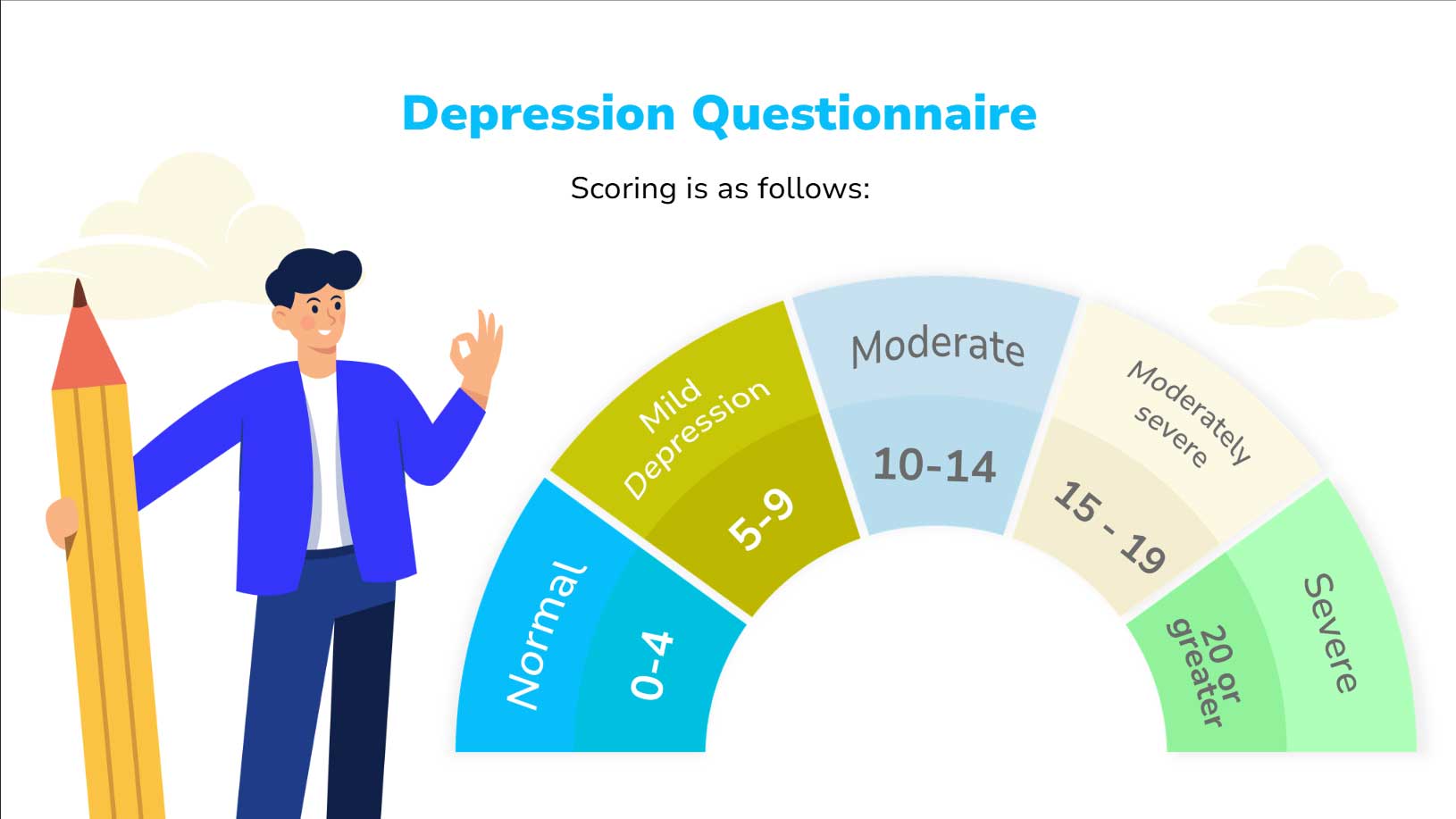
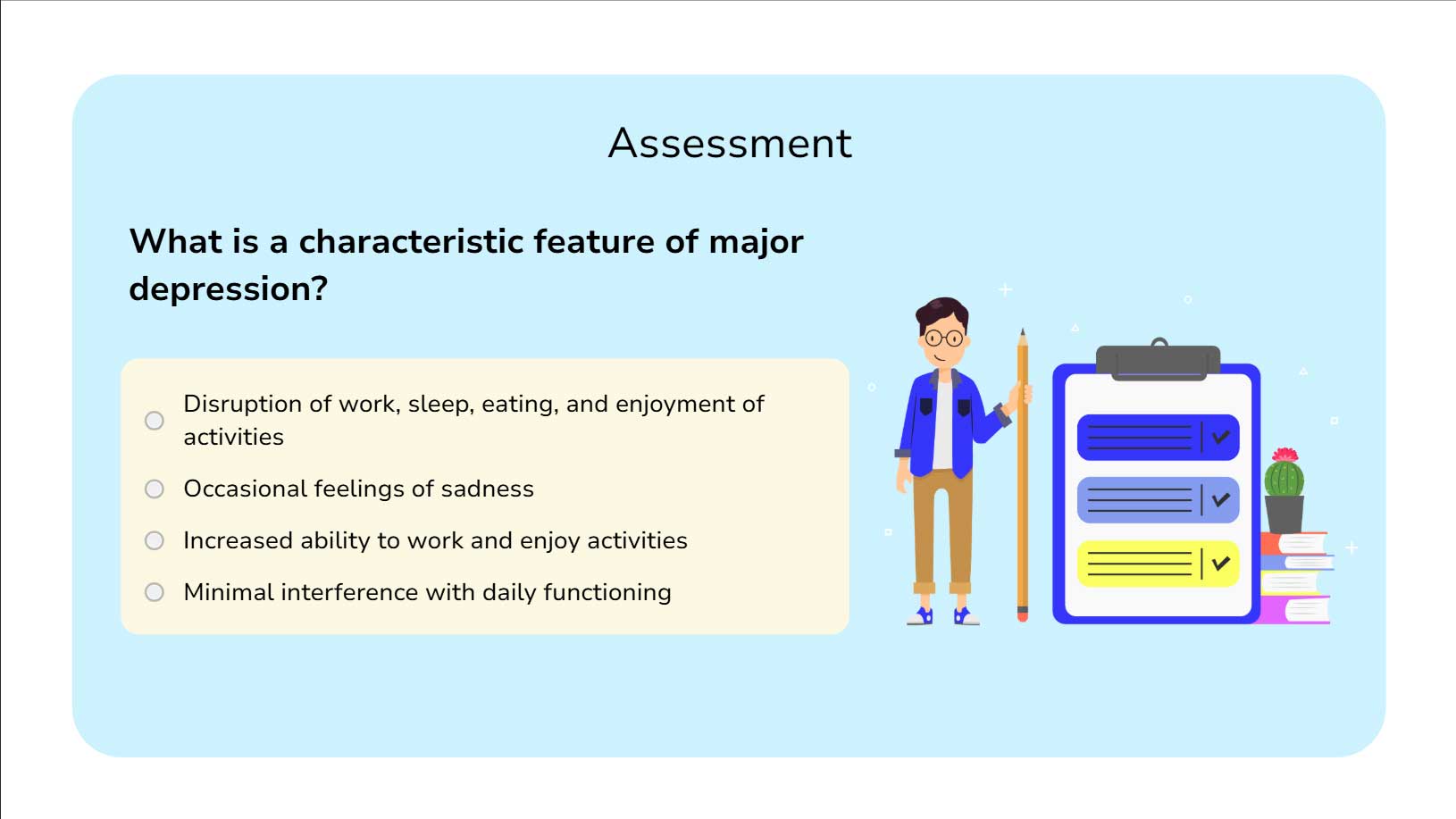
I converted a static 9-question clinical tool into a functional, private self-assessment. Learners receive a real-time “Depression Score” based on their inputs, moving the abstract clinical data into a personalized tool.
The PS vs. LS Balance Model
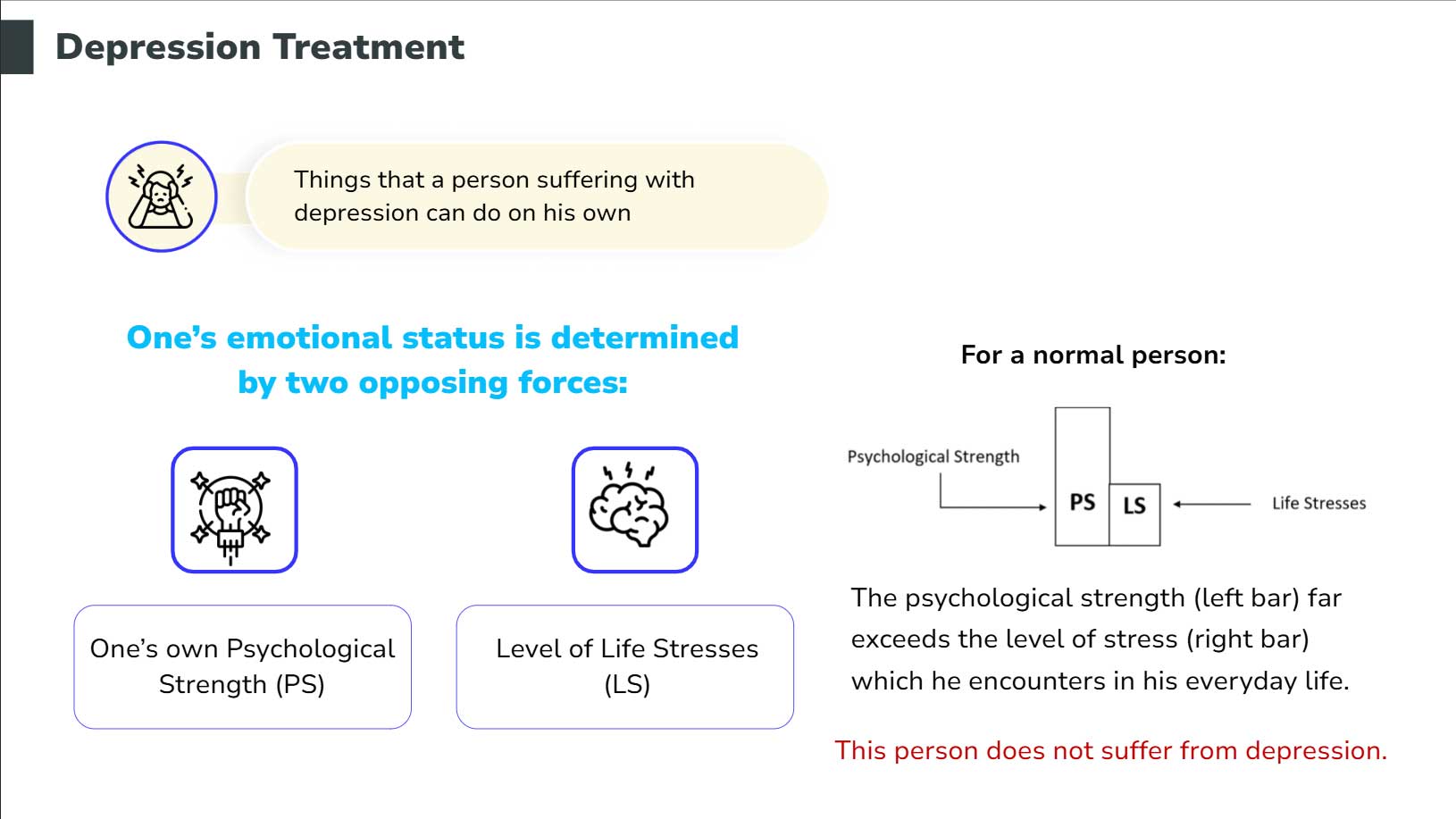
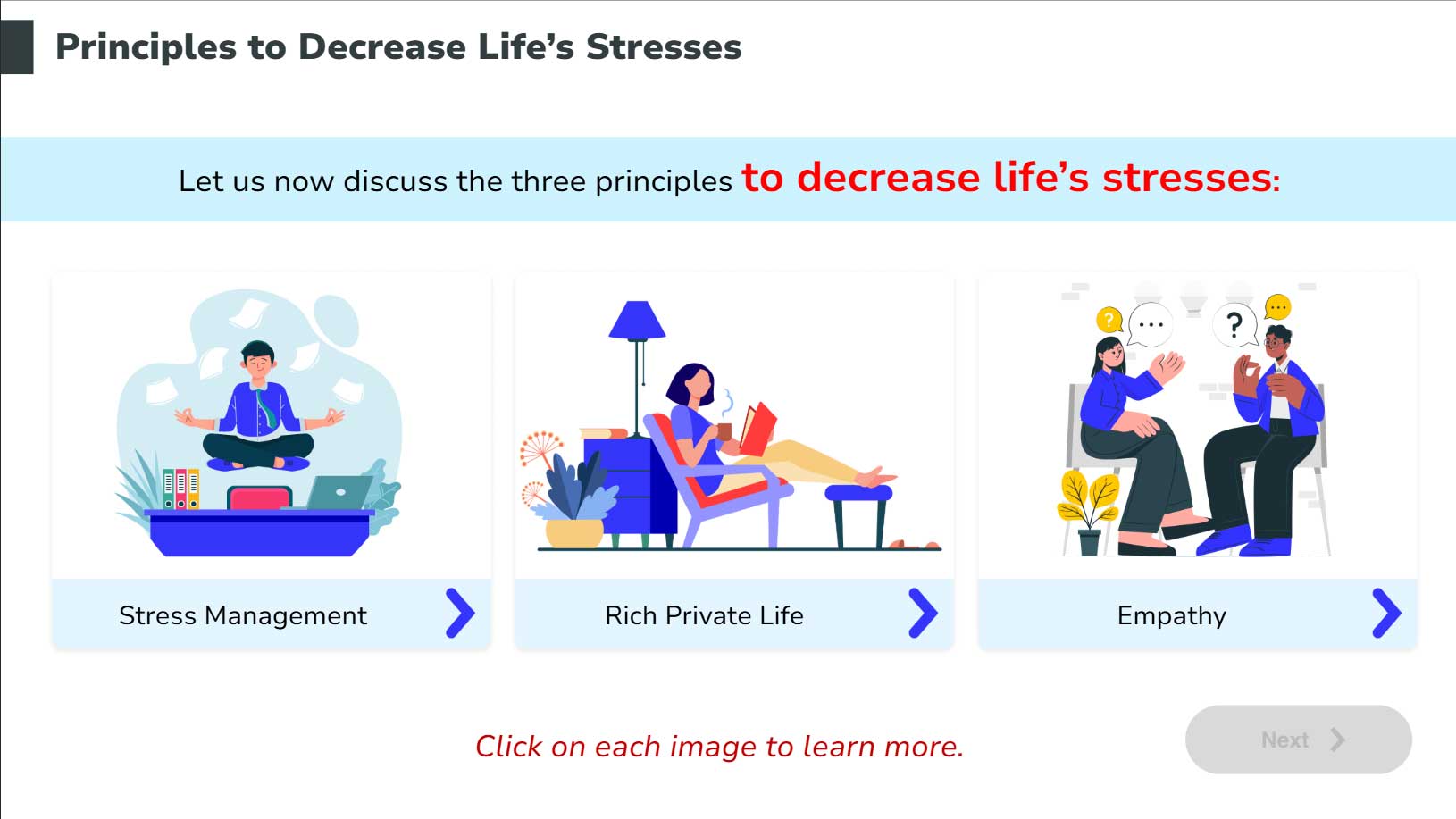
I created a visual representation of Psychological Strength (PS) vs. Life Stress (LS). By using interactive elements, learners can see how clinical treatment and lifestyle changes physically “raise” their strength bars.
Reflection & Result
By following a structured design process, I successfully bridged the gap between complex medical research and an engaging learning experience. The final project provides a clear, clinical roadmap for recovery while maintaining an empathetic tone throughout.
View the course
Watch a short walkthrough of the final interactive course experience.