
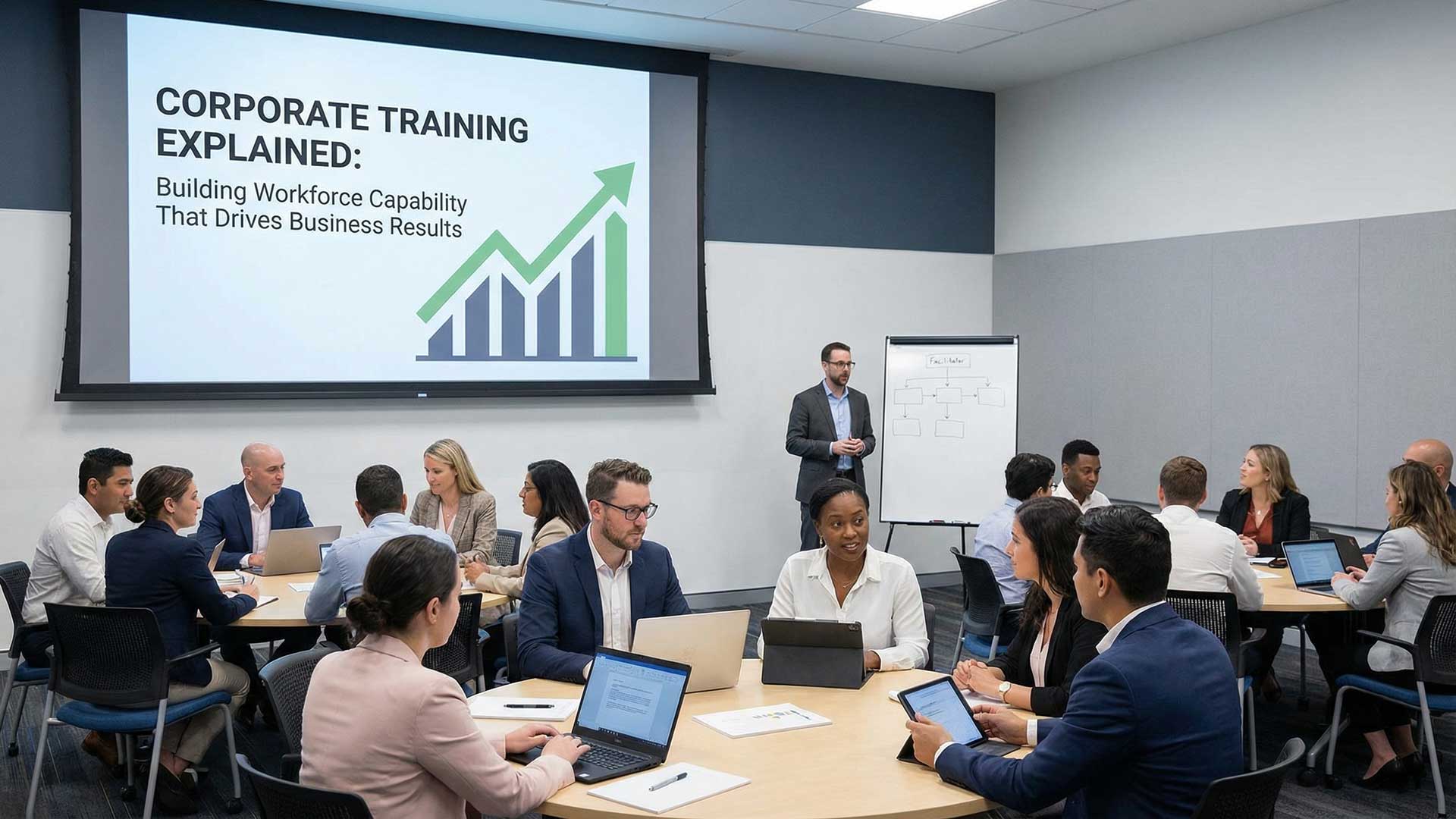
Corporate training plays a critical role in helping organizations build skills, maintain compliance, and improve performance. However, many corporate training programs fail to deliver measurable results because they focus on content delivery rather than behavior change and business impact.
Effective corporate training is not about more courses—it is about designing learning experiences that align with organizational goals, support employee performance, and scale across teams and locations. This article explains what corporate training is, why it matters, and how organizations can design programs that deliver real value.
What Is Corporate Training?
Corporate training refers to structured learning initiatives designed to improve employee skills, knowledge, and performance within an organization. These programs may target onboarding, leadership development, compliance, systems training, sales enablement, or operational excellence.
Unlike academic learning, corporate training is performance-driven. The goal is not just knowledge retention, but improved job performance, reduced risk, increased productivity, and consistent execution across the organization.
Why Corporate Training Matters
Organizations operate in fast-changing environments where skills, tools, and regulations evolve continuously. Without effective training, teams struggle to adapt, resulting in inefficiencies, errors, and missed opportunities.
Well-designed corporate training helps organizations:
- Accelerate employee onboarding and time-to-productivity
- Ensure regulatory and compliance requirements are met
- Standardize processes and best practices across teams
- Develop leadership and critical skills at scale
- Support organizational change and transformation initiatives
When aligned with business objectives, corporate training becomes a strategic investment rather than a cost center.
Common Challenges in Corporate Training
Many organizations face similar issues when implementing corporate training programs:
- Training content that is disconnected from real job tasks
- One-size-fits-all courses that ignore role-specific needs
- Limited learner engagement and low completion rates
- Lack of measurement beyond course completion
- Difficulty scaling training across regions or departments
These challenges often stem from a lack of instructional design and learning strategy during program development.
Key Components of Effective Corporate Training
Successful corporate training programs share several core elements:
1. Clear Performance Objectives
Training should begin with clearly defined performance goals—what employees need to do differently after the training.
2. Role-Based Learning Design
Content should be tailored to specific roles, responsibilities, and workflows rather than generic audiences.
3. Practical, Scenario-Based Content
Learning experiences should reflect real workplace situations, enabling learners to apply knowledge immediately.
4. Scalable Delivery Models
Programs should be designed for digital delivery through LMS platforms to ensure consistency and accessibility.
5. Measurement and Continuous Improvement
Training effectiveness should be evaluated using learner feedback, performance metrics, and business outcomes.
The Role of Instructional Design in Corporate Training
Instructional design ensures corporate training is structured, engaging, and outcome-driven. It bridges the gap between subject matter expertise and effective learning experiences.
By applying instructional design principles, organizations can:
- Translate complex information into actionable learning
- Design assessments that measure real performance
- Improve learner engagement and retention
- Align training initiatives with organizational priorities
Instructional design transforms corporate training from content-heavy courses into performance-focused solutions.
When to Invest in Corporate Training
Organizations typically benefit most from corporate training when:
- Scaling teams rapidly or onboarding large groups
- Introducing new systems, tools, or processes
- Addressing performance gaps or quality issues
- Managing regulatory or compliance requirements
- Supporting organizational change or growth
In these situations, a structured training approach reduces risk and supports long-term success.
If you are planning to strengthen workforce capabilities or improve performance across your organization, partnering with a corporate training specialist can help ensure your programs are aligned with business goals, scalable, and designed for measurable impact.